I used to believe Wikipedia was simply a good place to go and find sources for more topics that I’m interested in, but now I’m more inclined to believe that it really can be somewhat reliable for information depending on the article that you’re reading. Articles with more traffic are going to be more closely monitored and better policed to make sure no misinformation is spread. In the last reading I noted in my annotations and in class that over the years Wikipedia has developed a peer review program where other users all determine the validity of an article which is very encouraging to see. I’m really glad that in this day and age Wikipedia is seen as more reliable then it was during my younger years in school. During my time in middles school and even in high school we were discouraged from even looking on Wikipedia. It wasn’t until I got into junior college, that I had a professor encourage me to go on Wikipedia, he said that it’s a great way to find good primary and secondary sources for topics I’m interested in. Since then I’ve used wikipedia religiously in order to find more information about topics that I’ve wanted to research, it really has come in very handy. I don’t agree with calling it a ‘utopia’ since it’s far from perfect, even with measures in place since it’s humans maintaining it, there’s going to be some inherent bias in what’s written. However, just like most things in the world, you have to look at the good and bad, pros and cons and judge for yourself. If no for Wikipedia offering free information and gateways to fostering a love of history, I wouldn’t be where I am, so I’m always going to have a very healthy appreciation for the mission they are trying to undertake.
Author: domgk115 115
-
Blog Post week 5
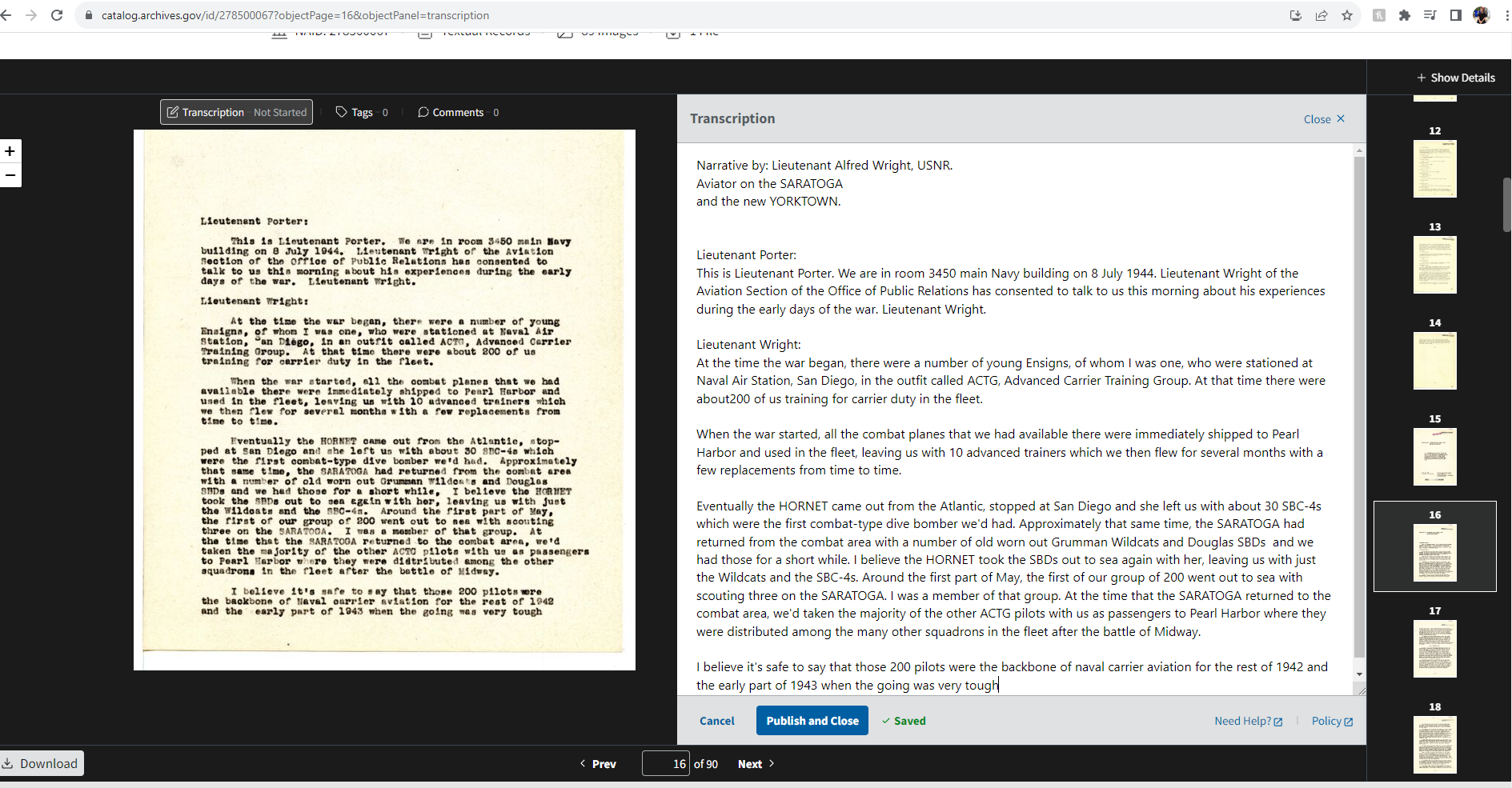
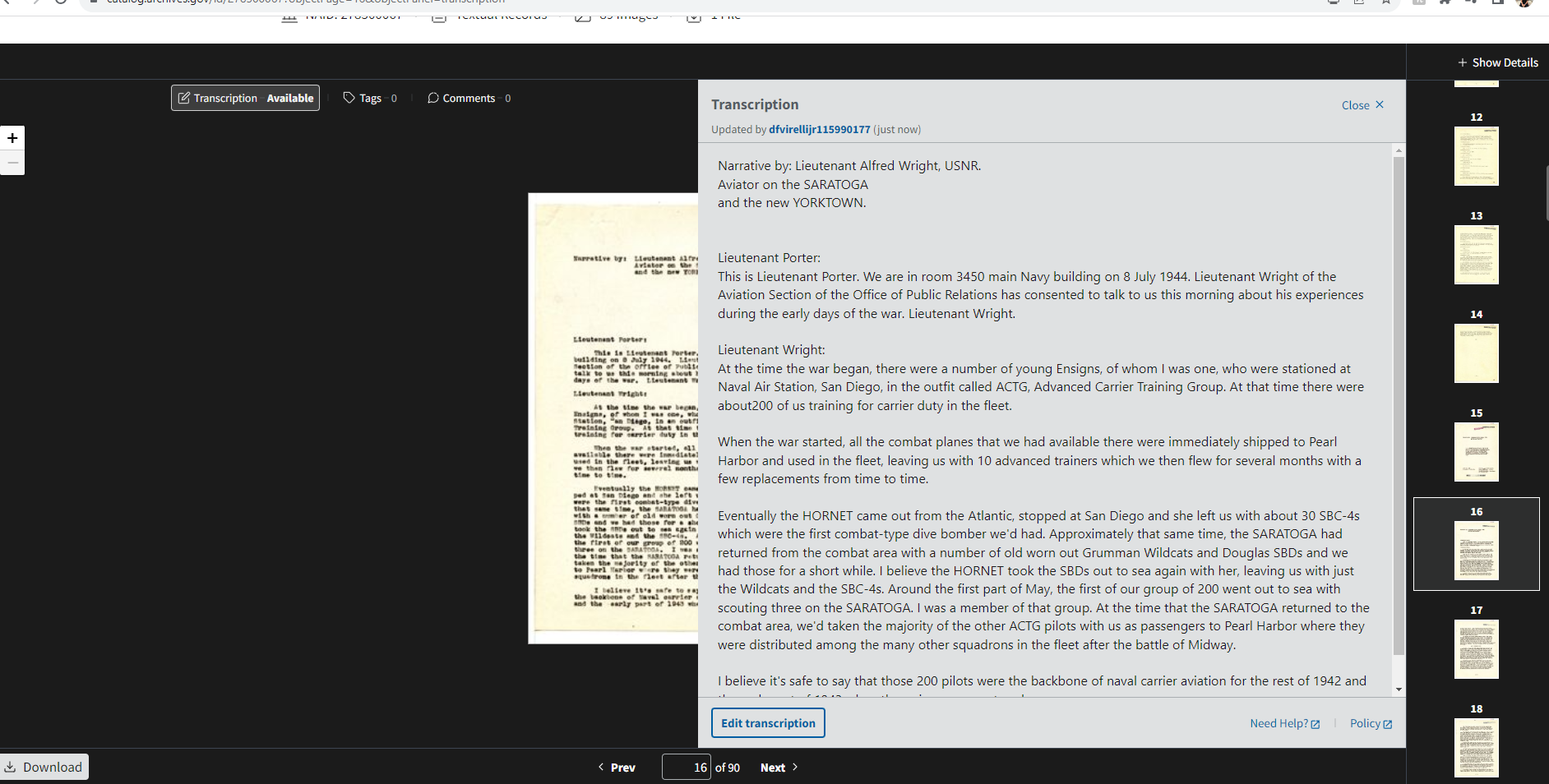
This week I transcribed a report between two navy officers from World War 2 shortly after the battle of Midway. Doing it on my own was relatively easy and I was really surprised to see just how easy someone would be able to do it. It was easy since the report was a telegram instead of an older hand written letter which more then likely would have been in difficult to read handwriting. The site to my surprise as well was very user friendly if a bit slow when I was typing in the transcription box. It also gives an update on how recently the documents were transcribed and the username of the person who did it, so while I didn’t test it myself, I’m wondering if it’s possible at all to go and collaborate with other users like a sort of social media platform. The document I chose to transcribe was talking about the transfer of boats and other weapons back to the combat zone between two lieutenant, and as someone who grew up with the history of World War 2, I think it would be interesting to read more to see the logistics of what was happening in the pacific after Midway.
If I were to organize a crowdsourced digital history project like this I more then likely would have it be on the same kind of topic I transcribed today, but the main challenge I feel as is usually the case with large events is the logistics of the entire operation. Making sure everyone has access to the correct software and stable WIFI, and handing out documents which could genuinely interest people to make sure they’re having a better time actually transcribing, if it’s a topic someone will be more interested in then they’ll be more likely to finish quickly and efficiently.
-
Blog post week 3
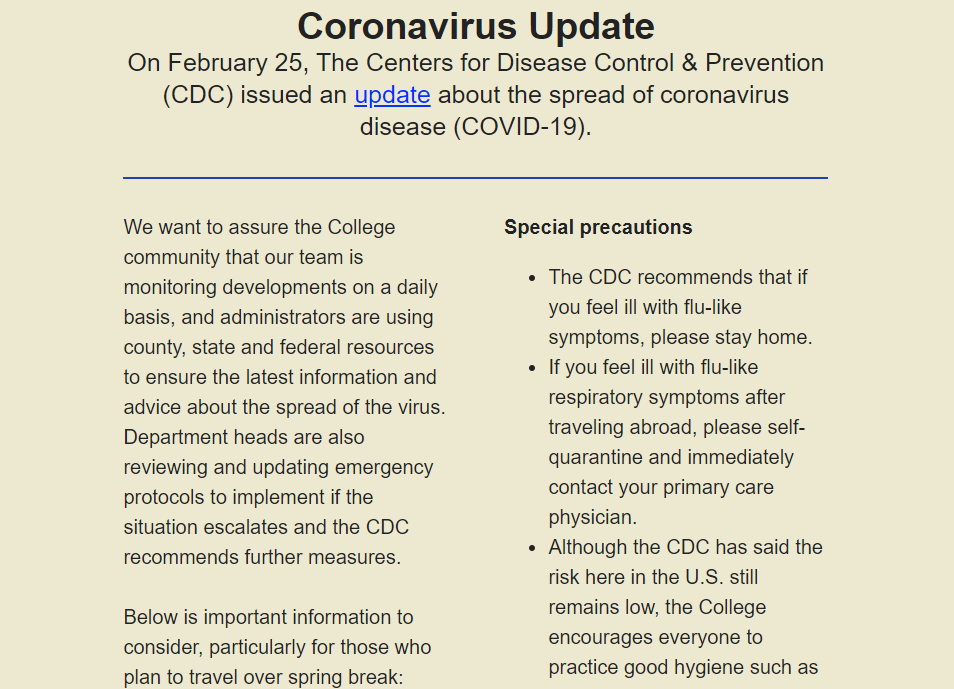
I was really surprised to see how easy it was to submit pieces to the Digital Covid-19 collection for Rowan. It was as simple as posting a link into a box and it was already posted. I assumed originally that it was going to involve a lot more steps, like a waiting period while administrators on the sight review the submission before it went up. However, it was fun to look through all of the submissions to see and compare other people experiences during the pandemic to mine. For someone like me, I wasn’t too affected by the pandemic seeing as I continued working like it was normal since I was an essential worker. I did drop out of school for the year when classes went all digital, but I was mostly unaffected. The piece that i submitted was the first Covid-19 update that was sent out by the RCSJ-Gloucester president concerning the virus. It was a bit ironic seeing the first update saying how the virus didn’t seem like it was going to be a very big deal. Obviously it ended being a very big deal.
-
Hello World!
Welcome to WordPress! This is your first post. Edit or delete it to take the first step in your blogging journey.
-
Blog Post WEek 2
After a week in Digital History, I would define it in my own words as ‘Using digital tools to help better understand and preserve history’. I wasn’t sure exactly what to expect, but after doing a bit more research and spending two class periods in Digital History, I’m excited at the prospect of learning more. The most interesting idea I’ve seen brought forward, is the idea of copying and transcribing old texts, documents and stories, taking pictures of old artifacts or other ephemera, and digitizing them into online archives so that one day if the original does for some reason disappear, we would still have the information contained. The idea of looking at documents from for example the time of the Roman Empire, and transcribing them into a digital form so we have the knowledge forever sounds like a rewarding career for someone like me. I expect a lot more hands on activities in class going forward, I find myself glad i took my PC to my dorm room instead of just my laptop this semester as it seems I’m going to really be using it a good amount. The only bit of experience I did have with any form of digitization or digital history before joining the class was admiring mapmaking or recreation of historical settings in video games or YouTube videos. I see there’s going to be an entire section dedicated to recreating history in Video Games which is something I’m very excited for as someone who plays a lot of historical video games. A side note is I really do hope to learn more about map making to recreate old historical maps and boundaries, along with podcasting and interviews, which is a big way I consume my history content.