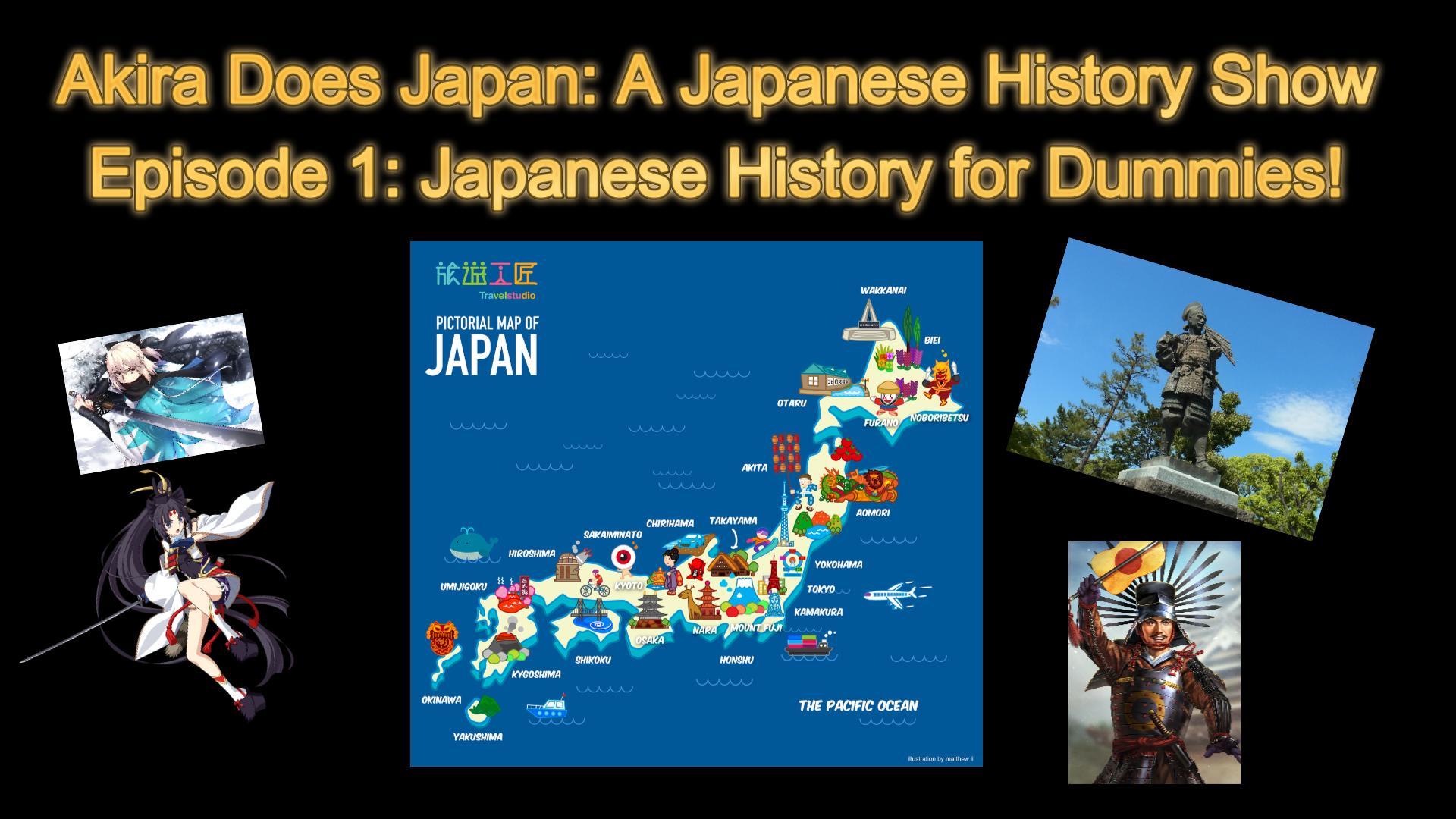
Episode 1 of Akria Does Japan is live! In it, I’ll give all those lucky enough to watch a breakdown of the different period of Japanese history, and after a week of editing it’s finally ready!
This show’s main goal is to make Japanese History a lot easier to get into for the average person. I leave plenty of sources for anyone who wants to go and study more in the description of the video on Youtube, while in the video I only briefly as I can go over each time period. The only thing that I was unfortunately not able to do, was upload my script into Youtube as a transcription to use for subtitles, I won’t be able to edit them manually by my deadline so I’ll have to let Youtube do its best. So the ones in the video are unfortunately going to be the Youtube generated ones, but to compensate, I’ll be leaving a transcription below for Episode 1!
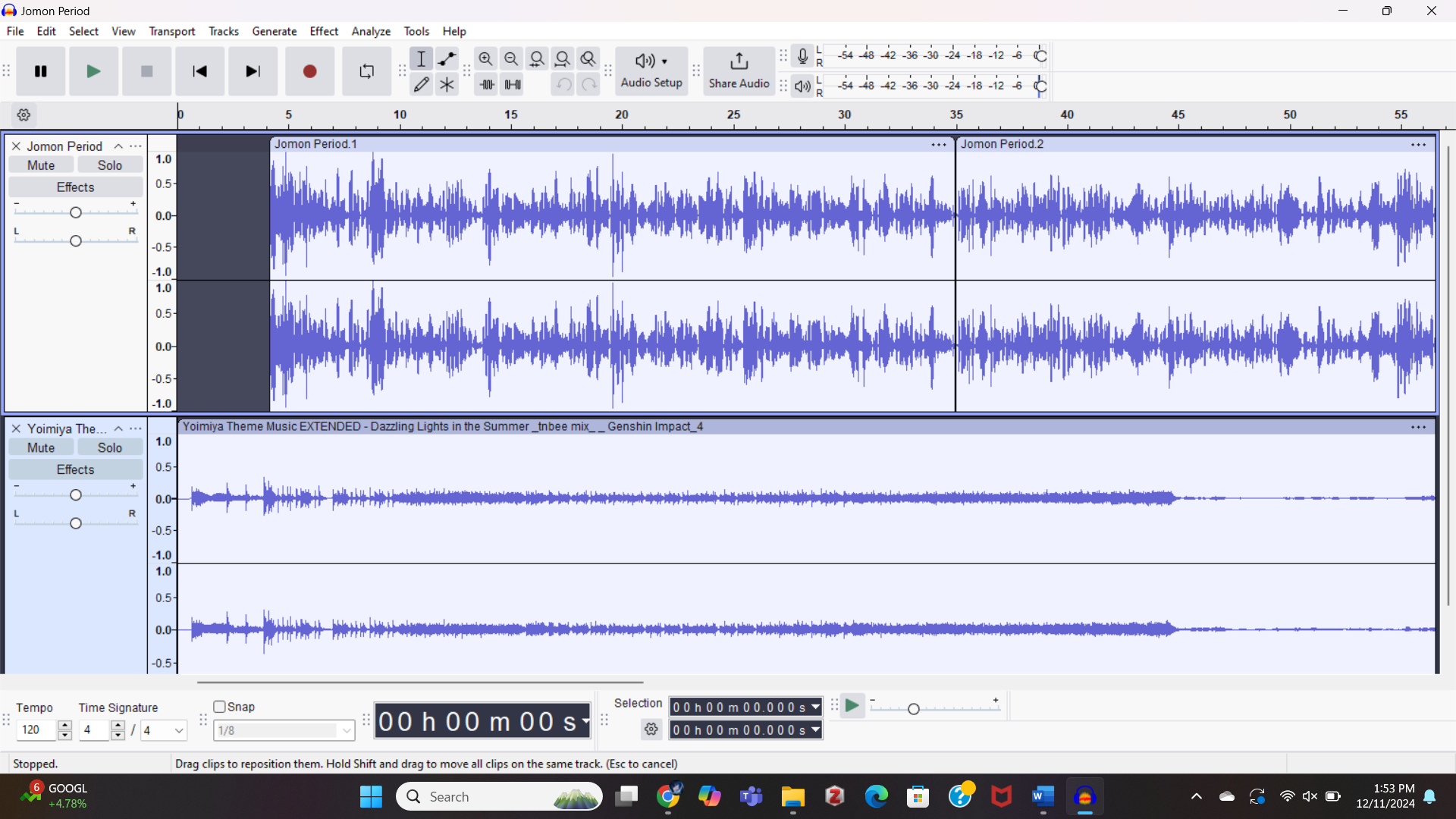
The process to finally bring this online was all over the place, and surprisingly the actual research and history was the easiest part of the entire process. The first hard part, was actually recording, seriously, I had to do at least 30 takes on some of the sections, and in some of them I even still think I could have recorded my lines a lore smoother. However, after THAT I had to go and edit the actual audio clips themselves, and that took days since I was doing my best to cut out pauses and any filler words. This, however, all paled in comparison to actually editing the video. The amount of images I thought were enough was NOT nearly enough as it turns out, and I had to get more, and then work on making sure all the cuts and transitions of images lined up with my voice in the recording. It wasn’t something I could simply breeze through with music on in the background, it took hours upon hours for four days straight until I was finally finished all 49 minutes. Of course, I had an entire week of editing taken away from me when my room flooded and couldn’t access my PC for a week straight, but in the end I got it done and I couldn’t be happier!
So, I’m not sure when Episode 2 will be out, but I’ll start working on it! Thank you all so much to those who decided to watch!
Episode 1: Japanese History for Dummies, Transcription: Konichiwa and Hajimemashite my fellow nerds! My name is Akria and I’m super excited to welcome all of you wonderful nerds to the very first episode of Akira Does Japan! Where me-Akira- takes you on a wild journey full of Samurai and Rice Politics, through the different eras of Japanese history! We’ll go on a journey from the first rice farms to Queen Himiko, to Minamoto no Yoshitsune, the Mongol invasions of Japan, to Oda Nobunaga and all the way to when Emperor Meiji finally took back control of Japan!
Now, who am I? I’m Akira! Now is that my real name? Of course not! I don’t want any crazy people looking me up and knocking on my door forcing me to commit seppuku because I accidentally mess up the names of Yoshitsune and Yoshinaka or because I don’t call the Progenitor God Izanagi “He who invites”, and before you think I’m overreacting, I promise you I’m not, have you SEEN the internet lately?!
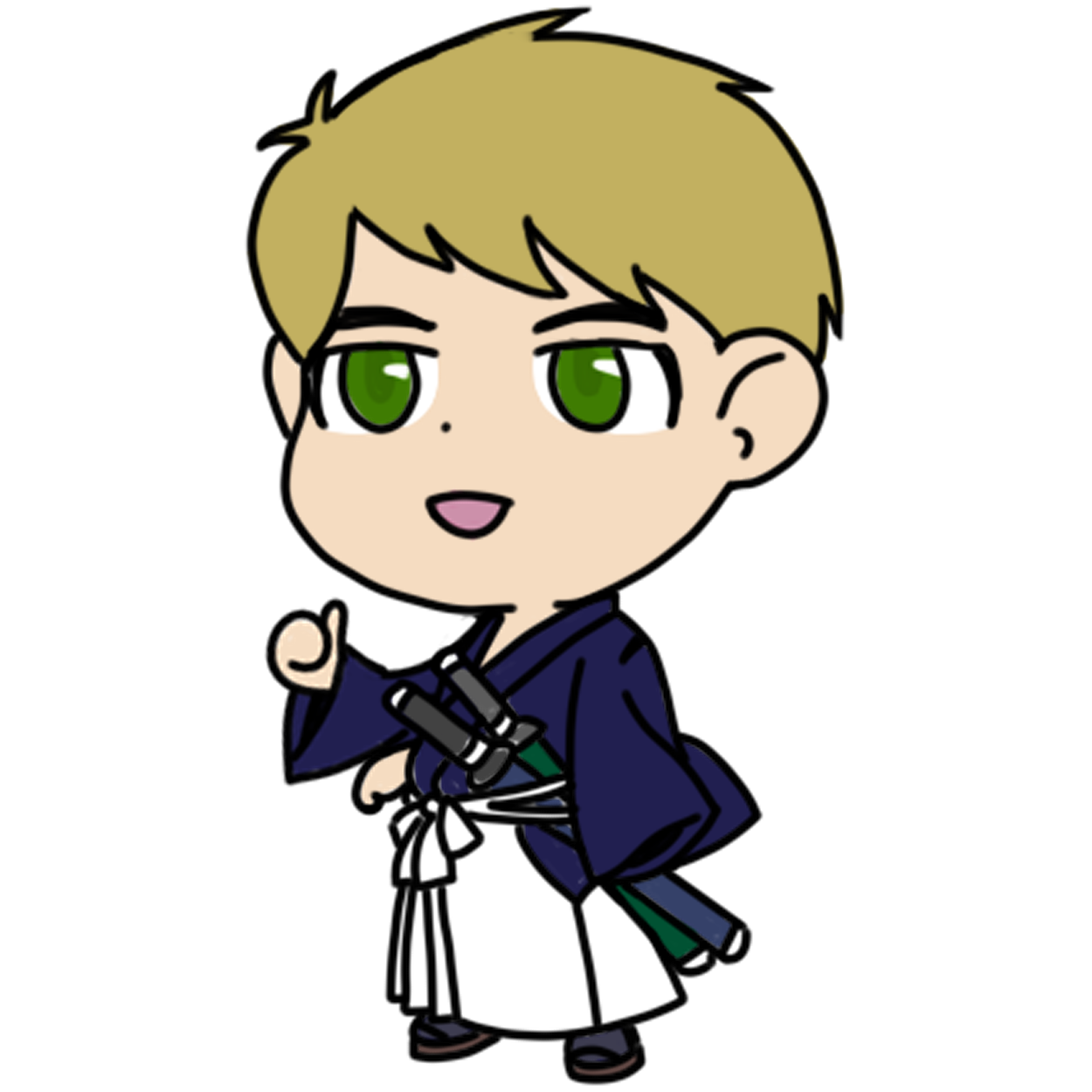
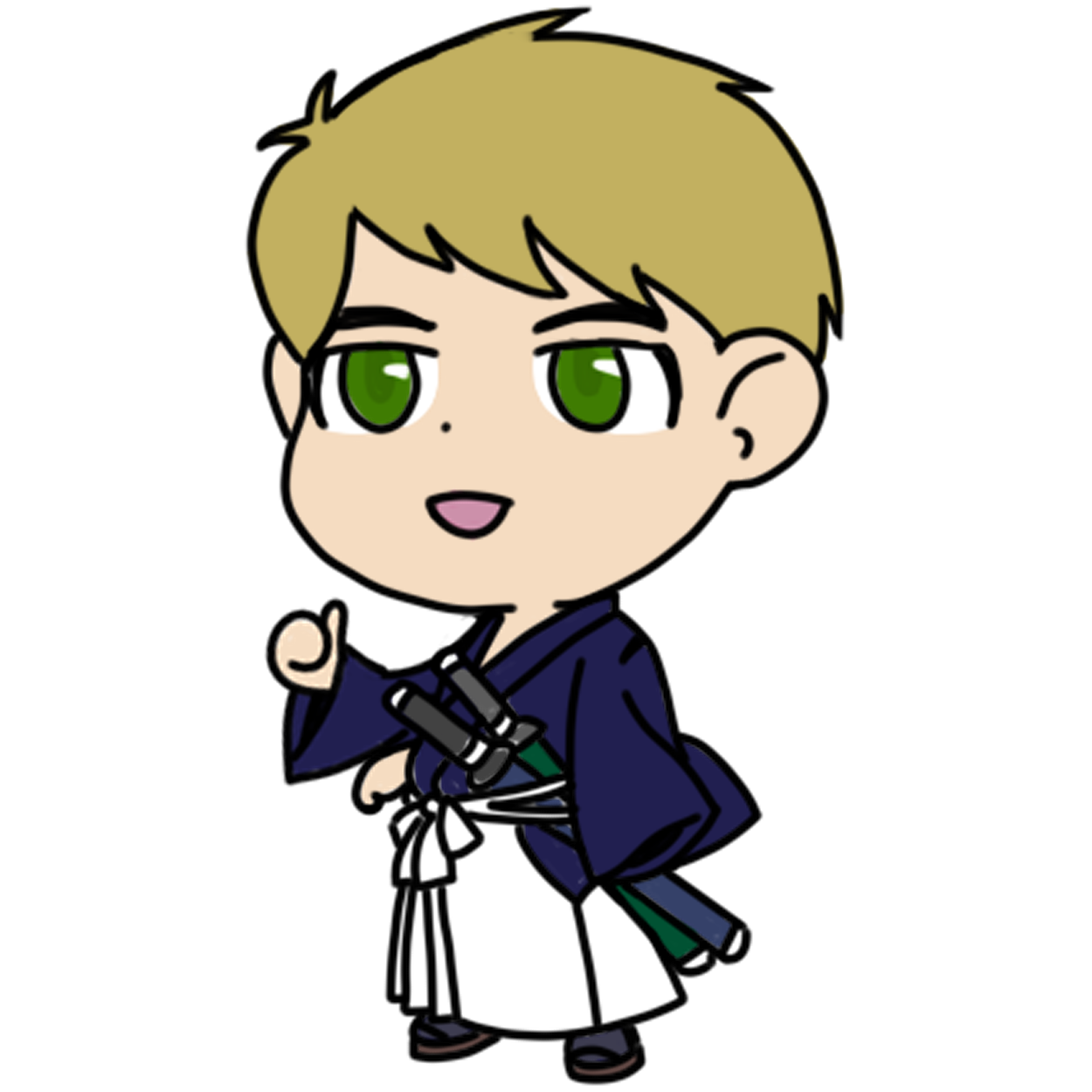
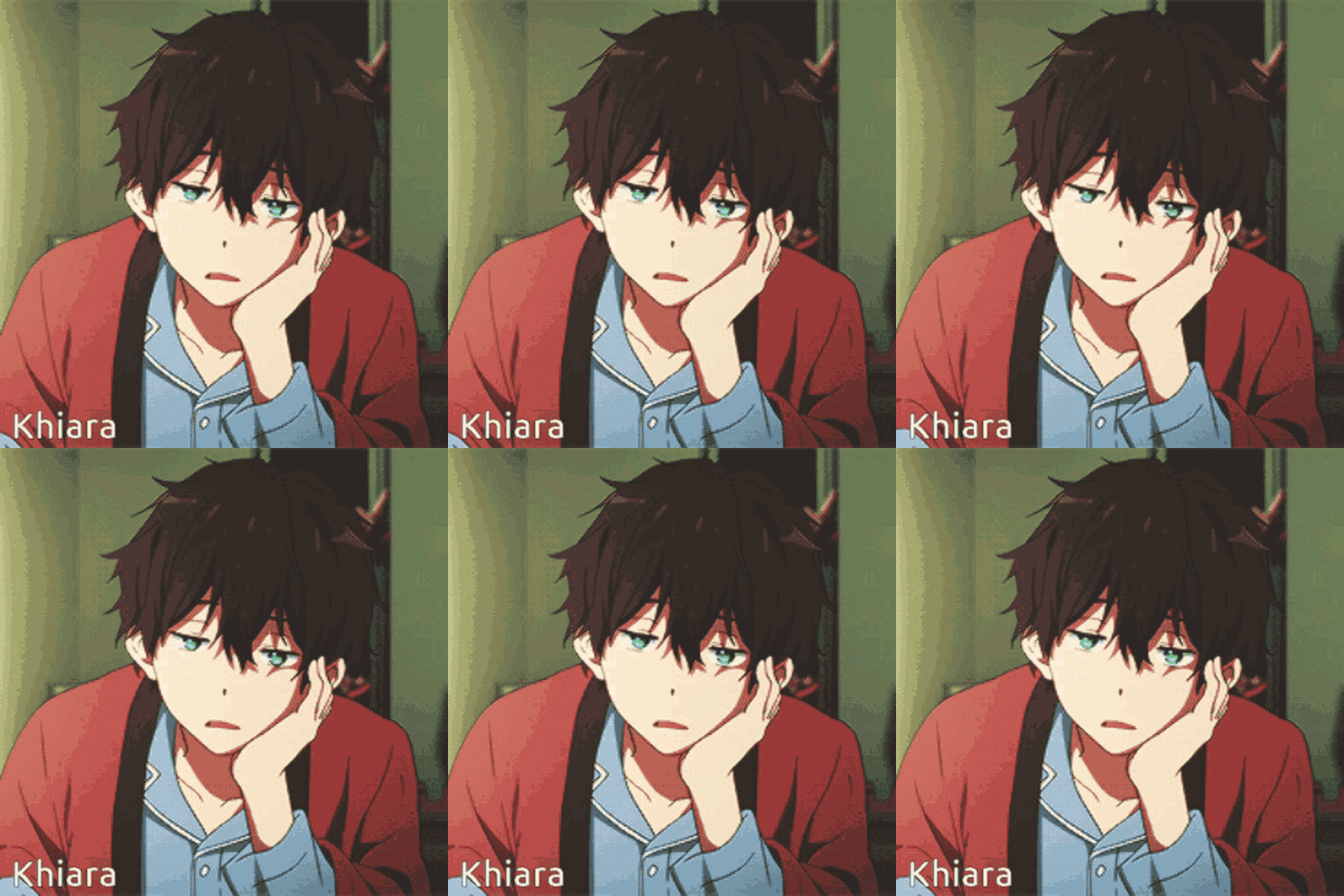
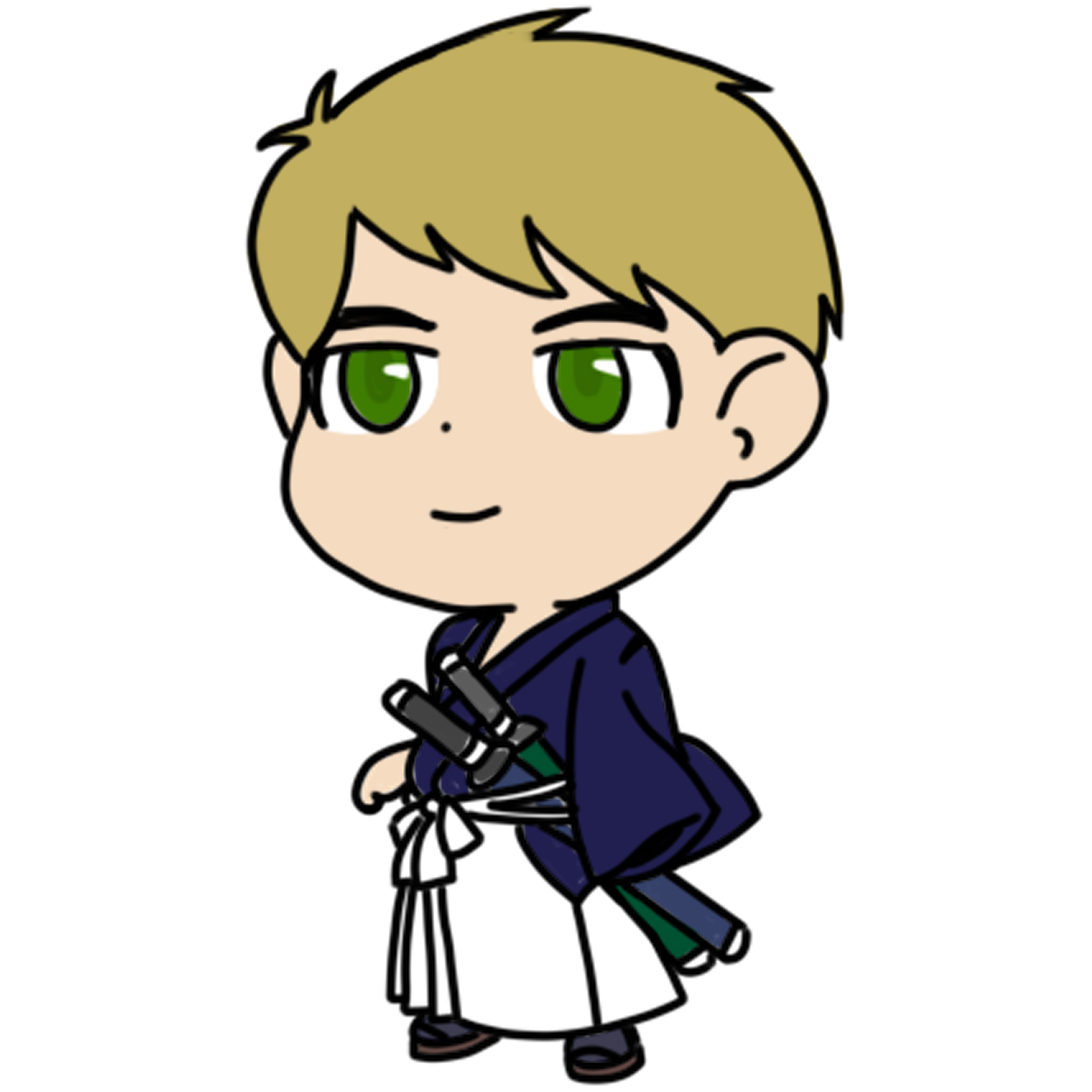
No, Akira is the name of the character you see on screen, and he’s going to be delivering to you all the ins and outs of Japanese history that he can. Now, while in real life I am in the process of getting a Masters degree in history, along with degrees in cultural anthropology and Japanese, I want to preface everything in this series by saying, I’m not a published academic researcher, I don’t have a PhD in East Asian studies-although one day in the future I’d like to-I’m just a nerd who loves anime, good food, history and culture. I just also happen to for almost all of my projects, papers and research topics throughout school, find myself drawn to the history of Japan, and I want to share a little of what I’ve learned with you all!
As mentioned before, my love for the history of Japan all stems from my love of anime and the otaku culture in general, so when I began a masters degree in history, I thought it was super cool researching all the real-life counterparts from some of my favorite anime and manga. This led me down a rabbit hole that I’ve yet to emerge from, seriously, I can give you all the known details of the life of Miyamoto Musashi, ONLY because I watched and played Fate Grand Order, it’s what made me go through and read all the amazingly researched books in his life, however, that’s not to say it was easy at all.
The idea for this show came from one simple fact, and that’s Japanese history is DENSE. Seriously, for such a small island, they’ve had a MUCH larger impact on the global stage then one would think. However, most of the scholarly research I came across when I first became interested in the history of Japan, was mostly focused in the 20th century, and more specifically World War 2. Which makes complete sense, given that I live in the United States, and the two countries incase you live under a rock had a BIT of a squabble in that war.
Me, however, I wanted to learn about Samurai! I wanted to learn about Ushiwakamaru and Miyamoto Musashi, about Tamamo no Mae and the Shinto gods. I wanted to learn about the GOAT Toyotomi Hideyoshi and how he unified Japan after Nobunaga’s death. I wanted to learn about the REAL Mongol invasion of Japan after playing Ghosts of Tsushima, and more about Okita Souji, Hijikata Toshizo and the Shinsengumi! However, the problem was, a majority of the books regarding Japan was mostly contemporary history, spanning from just before World War 2 and the Showa Era to the modern day, no matter how hard I tried I couldn’t find my Samurai!
Eventually of course, I did find books and research about the eras before the Meiji Restoration, however, this was mostly the Edo Period-seriously I’ve read so many books about the Edo Period, you could drop me back into time and I’d fit right in-and it took even more work to find well written and researched material from further back! And when I did? Those things were HARD to read, seriously, most of the time the language and prose used were so advanced it made my brain melt. I had a bit of an advantage and got better at it, since through proxy of getting a history degree, I came to read more dense academic texts. It was thanks to that, I was able to absorb and finally truly learn about the periods I was so passionate about!
This whole journey to become knowledgeable in all things Japan, however, made me realize something… what would a younger person perhaps in high school, or someone without access to a university archives and PhD level professors do if they wanted to start researching the same stuff? If someone like me, watched and played Fate Grand Order, and wanted to start learning about the real life Ushiwakamaru-not the one voiced by the incredible Sayori Hayami- and Tamamo no Mae and the time periods they were active in? What if someone wanted to learn HOW the Japanese could do what they did in World War 2, and the parts of their culture that seem so foreign to us? Well, the answer is they can just do what I did and go read all those incredibly dense and LONG academic texts, but what if they don’t have time? Or what if they struggle with the academic language and weird terms history books tend to have?
My answer? This show that’s what! I didn’t only read those thick books and articles to learn about Japan, I found plenty of Youtube Channels, and a few gem textbooks that seriously made it easy for me. They had all the amazing information that I wanted to learn, and were incredibly well researched, but it was presented in an easily digestible and most importantly entertaining way! They served as a springboard for me into further research and got me to where I am today, and so, I decided that to help people who may be in my position now, I’d share what I can, and make Japanese history more accessible to the general public!
Now, please don’t be offended by the title of the first episode, I’m NOT calling you dummies, not at all. And I’d like to think I am not a dummy either, I just thought that it was a funny title that really gets across what I wanna do with this series! I wanna make Japanese history easily accessible and simple enough that dummies could understand! Of course, that doesn’t mean some of the stuff we talk about won’t be a little complicated, but I’m gonna do my best to break it down for you, and I hope you enjoy it! Here today, we’re gonna ease into it with what I believe is the best way to start researching the history of ANY civilization or country, with a timeline! Seriously, I LOVE timelines and maps, and that’s what I’ll do for you today. I’ll go over the periods of Japanese history all the way up to the Meiji era, which for anyone wondering begins in 1868 and ends in 1912. The Taisho, Showa, and following eras are pretty easy to find information about, so I’ll skip those for now.
I’ll go over the periods of history before that, in this introductory episode, I’ll give you a quick rundown of the years of the era, the major developments, some major historical figures, and some cool fun facts if I have them, I’ll even give you some movie, manga or anime suggestions that feature the period if I have them! All of this will be accompanied by some books and sources I personally think are great if you wanna research them more. I’ll leave that list of books down in the description, along with links to order or borrow them if you want. Now, each of these periods could seriously have their own entire semester long class dedicated to them, and sure enough their own episode, but to start this first episode, I’ll just give you a quick rundown! Now, that’s enough blabbering on in the intro! Ikuyo! Hajime Mashoo!
A disclaimer off the bat, all the dates I use for the time periods are approximate dates, a lot of them scholars sometimes will argue started later or earlier, but I’m going to give you the generally agreed upon years! That being said, the Jomon Period or the ‘Jomon Jidai’-Jidai is the Japanese word for era or time period- begins around 14,000 B.C.E in the Upper Paleolithic Period of World History, and lasts until around 300 B.C.E, although some argue will argue the following Yayoi Period started way earlier, however, one thing that can’t be denied is that the Jomon were first, and boy did they leave their mark!
If I had to make a comparison for the Jomon people to a culture that people in North America would know, I’d point them to the pre-Columbian Native American Cultures of the North American Pacific Northwest, due to the amazingly intricate culture that developed from what was mainly a hunter-gatherer type people with limited knowledge of horticulture. Now there’s not enough evidence to say that the Jomon were ONLY hunter-gatherers, especially as we reach closer to the Yayoi period, and this conclusion is mainly reached due to evidence of a more sedentary lifestyle-which is a fancy word for the beginnings of village life-that comes from the main source of information we have on the Jomon, and that is their BEAUTIFUL pottery.
Seriously, LOOK at some of these beautiful pieces, it’s always been so fascinating to me how people from as far back as 14,000 B.C.E were able to create things like these. The name Jomon actually comes from their amazing pottery! An American Orientalist and Zooliogist, Edward S. Morse discovered shreds of Jomon pottery in 1877, and after seeing the distinct style of the pottery, translated the term ‘straw rope pattern’ into Japanese as ‘Jomon’. That ‘straw rope pattern’, can be seen if you look closer at Jomon pottery, they had a distinct style of decorating their pottery by pressing cords into the surface of wet clay to get some of these breathtaking designs.
Now, the Jomon didn’t ONLY make pots, they also seemed to be adept at using stone tools in later years, and even showed evidence of bowmanship and deep-sea fishing! However, their pottery is a huge reason many believe the Jomon eventually evolved in a more sedentary lifestyle, pots especially some of these Jomon designed ones, are fragile, bulky, and not conducive to a hunter-gatherer type society. This, along with abundant food resources, may have set the stage for our next period of Japanese history!
The beginning of the Yayoi Period is a hotly debated topic, the year I’m going to give you all is 300 B.C.E, but some people believe that it could have started a few hundred years earlier. However, it’s generally agreed upon it last up until around 300 C.E. No matter how you date it, the important thing to know about the Yayoi period, is that it’s named after a large group of people thought to have migrated from the Korean Peninsula to Japan. It’s generally believed that the Yayoi and the Native Jomon, did NOT get along very well at first, but after a couple decades, the two groups eventually intermarried the result, it’s generally accepted that modern day native Japanese people are most genetically similar to this group.
The Yayoi brought over with them a LITANY of things, but one of the most important was more advanced metallurgy. Tools like rakes, hoes, swords, and even things like bells and mirrors were brought over and give us some of the most beautiful artifacts from this era. They were AMAZING at working with bronze, and we can see that in their mirrors, and in other things like these large bells called dotaku used in early religious ceremonies. It’s during this time where we really begin to see more permanent settlements with buildings of wood and stone pop up as well.
However, the MOST important thing they brought? RICE! No seriously, the advanced forms of agriculture, mainly rice farming, was easily the biggest thing we see introduced at this time. I’m not kidding when I say you live or die by rice in pretty much all of these eras of Japanese history we’ll discuss. Samurai payment in later periods was literally paid in rice and farmable rice land. With rice, came power, with power came wealth, and this is what lead eventually the first quasi ‘Nation’ in Japan, with it’s ruler becoming the first one recognized outside of Japan!
Yes, China-more specifically the Kingdom of Wei from the Three Kingdoms Period, another mind boggilingly awesome period of history- AROUND the year 238 C.E, received and recognized an envoy from what they called ‘The Kingdom of Wa’. The name of this Kingdom in Wa, was the legendary Yamatai-koku, which was supposedly ruled by someone Tomb Raider Fans will know well, one of the most legendary figures in Japanese history, Queen Himiko. Not much at all is known about Himiko or the location of Yamatai-koku. Seriously, the debate over Himiko and the location of Yamatai-koku has led to actual physical violence between historians-I’m not joking give that a google search- but that doesn’t stop Himiko from taking shape in modern Japanese media as a wise powerful Shaman ruler.
So, as you can probably guess, really the only super important person in this period, is Queen Himiko. Her and the ‘legendary civilization’ of Yamatai-koku are parts of the main plot of the ever popular ‘Tomb Raider’ game released in 2013, seriously, that game is amazing I HIGHLY recommend it even if the actual history is a bit… lacking. The foundation in real life Himiko and Yamatai-koku built, however, leads us directly to our next period!
Music Change: Wandering Winds, Kaedehara Kazuha, Genshin Impact.
Yamato:
Stop me if you heard this before, but the actual start date of the Yamato period is highly disputed. I know, I know if there’s one thing the Japanese always strive for it’s their dates to be correct. The GENERALLY agreed upon range, is 250 C.E. to 710 C.E, and the Yamato period is unique as it incomposes two smaller periods which sometimes people use instead, those being the Kofun Period from 250 C.E. to 538 C.E, and Asuka Period from 538 C.E to 710 C.E. Now, some of you probably just said ‘Hey Akira wait, you just said that Yayoi Period ended in 300 C.E., but now you’re saying the Yamato Period started in 250 C.E?” And to that I saw, thank you for paying attention, also, I’ll let you all know now, there is generally a LOT of overlap in exact dates for Japanese periods, that’s why there’s so many debates on start dates, so for now I’ll keep giving you generally agreed upon dates. The Yamato Period had a LOT going on, and in the future I’ll even go over the specifics of the Kofun and Asuka periods, but for now, I’ll focus on easily the most important feature of this period, and that is religion, more specifically, the spread of Bhuddism.
In Japan, the native faith is called Shintoism, and yes, before you ask Izanagi and Izanami from Persona 4 are the progenitor gods of Shintoism! If you don’t know what that is, it’s another game I highly recommend. However, if you recognize names like Izanagi and Izanami, Amaterasu and Susanoo, those are Shinto gods. Shintoism has a large emphasis on worshipping nature and spirits of nature, and still is practiced by people in Japan today. In the Yamato Period, however, is when a new religion finally made its way to the Land of the Rising Sun. Buddhism. Buddhism of course, are the teachings of the Buddha, Siddhartha Gautama, from his journey to achieve enlightenment. I won’t go into the ins and outs of Buddhism now, but it became a MAJOR debate amongst the powerful clans and Emperor at the time.
The profound impact Buddhism had on Japan can’t be understated. Coming over from a Korean envoy, the court of the Emperor was divided on whether to accept this new religion or not. As you can probably tell, they eventually did, and it led to an extremely unique religious system in Japan and is to me one of the most fascinating cultural transitions in history. Unlike Christianity, Islam and other monotheistic religions, Buddhism and Shintoism didn’t have belief in a supreme god that practitioners felt the need to fight for. Buddhism, and more specifically Buddhism from China and Korea influenced everything the Japanese court did, the way they started building, situating their government, and even speaking were attempts to become more like China.
Buddhist figures intermixed with Shinto figures, and it led to an absolutely fascinating mixture of the two religions and their cultural practices. They also from China, started learning the philosophical ways of Confucianism and Taoism. In the Yamato Period I always describe Japan as the ‘unruly little brother’, who is always trying to emulate its older siblings, in this case the older siblings are China and Korea. China was seen as the first and most powerful nation, and their greatness spread to Korea, and then to Japan itself. This ‘little brother’ mentality, this attitude of needing to catch up and prove their greatness is an attitude that we see prevalent in future eras, and would even define some of them.
Now, if you learn about ANYONE in this period, you want to learn about Prince Shotoku. He’s basically Japan’s Prince Charming, he’s revered and honored as one of the greatest practitioners and spreaders of Buddhism, however, he also kept his Shinto faith, and is largely responsible for the peaceful spread of Buddhism in Japan. Future key religious figures in Buddhism like Saicho and Shinran claim to have been inspired by Shotoku, so if there’s anyone you wanna learn more about in this period, it’s Shotoku. We haven’t had TOO many really important named figures in these early periods, but this is about to change as the Capital of Japan changes as well!
Okay now while the last few periods seriously rock, the Nara period is when I believe we start really seeing Japan as we see it today. The Nara Period typically ranges from 710 C.E. to 794 C.E, you’ll notice this period is a bit smaller, and there’s some debate on whether the beginning should be pushed back a bit, but it’s classified this way due to the fact that in 710 C.E. the Capital of Japan was moved to the city of Nara or Heijo-Kyo as it was called during that time. The trend of Japanese aristocracy attempting to emulate the architecture, court system and culture of China continued, as Empress Genmei and the architects modeled the city of Nara after the city of Chang’an of China’s ruling Tang Dynasty.
Now, there’s plenty of notable figures in the Nara Period like Emperor Kanmu, Emperor Shomu-who ordered the building Greta Bronze Buddha Statue inside the UNESCO World Heritage Site Todaiji Temple- the Buddhist monk and founder of the Mt. Hiei Monastery Saicho, Hieda-no-Are the writer of The Kojiki-who is theorized to maybe have been a woman- but if you know anything about Nara Period, let it be that the two great ancient texts of Japanese history were written during this time. The Kojiki, and the Nihon Shiki.
The Kojiki or “An Account of Ancient Matters”, was written by Hieda-no-Are and O-no-Yasumaro at the behest of Empress Genmei and is the oldest extant literary work in Japan. Now, the Kojiki is unique, as it’s both a mythological origin story and a traditional history book all at the same time. Hieda-no-Ara is said to have been ordered by Emperor Tenmu to memorize all the records and oral traditions concerning the Imperial Lineage, and before you ask YES I am being 1000% serious, this Hieda-no-Ara was ordered to memorize 700 years of Japanese history, and he DID IT to before helping O-no-Yasumaro compile the records. Seriously, I had to have a separate tab open for each of these periods I’m talking about to remember the dates, and this guy memorized the entire Imperial Line.
Now, while one of the main purposes of the Kojiki was to diefy the Yamato Line of Emperor’s by claiming they were a part of the divine line going all the way back to the Shinto Sun Goddess Amaterasu, the Nihon Shiki had a much different purpose. While the Kojiki was essentially Japanese history written for the Japanese with a higher amount of emphasis on the myths of the past, the Nihon Shiki would essentially serve as Japanese history for everyone else. The book is a reflection of it’s time, and the influence the Chinese had on Japan. Japan wanted a written history that could be compared to the annals the Chinese had. It’s not as… exciting a read as the Kojiki in my opinion, and while it does include elements of Japanese mythology, it has a much bigger emphasis on the reigns and great deeds of Emperor’s, and serves as the biggest source of information for historians and archaeologists to study Ancient Japan.
Now, if you want to read these two epic texts, first I highly recommend reading other books or watching videos on Shinto mythology first-don’t worry I’ll leave some in the description. But I recommend this, because most of the time the Kojiki and Nihon Shiki in written form use direct translations for names. For example, in direct translations Izanagi and Izanami the progenitor gods of Japan are referred to as “He-who-invites” and “She-who-invites” throughout the story. Now, of course this is their names from the original texts itself, but nowadays even the Japanese use their new modern names. So, if you were to jump right into direct translations without having more context you’d probably be awfully confused, and hey! That’s what this show is about, making sure you’re not confused! But if we’re talking about classic Japanese literature, stories epic battles and wars, the rise of the Samurai our next period has ALL of that, seriously, I’m actually giddy right now let’s get right to it!
Okay, now I wanna say right away if someone asked me for a ranking of my favorite periods of Japanese history I’d literally pull my hair out deciding whether to put the Heian Period or the Sengoku Period at Number 1. Seriously, not only is the Heian Period seriously EPIC it’s also-all my bias aside- arguably the most important period in all of Japanese history! We have the publishing of amazing classical works of literature like The Tale of Genji and The Pillow Book, we have epic heroes like Sakanoue-no-Tamuramaro, Abe-no-Semei, Minamoto-no-Raiko, Tawara Touta, Tomoe Gozen, the ultimate underdog and most legendary Japanese hero Minamoto-no-Yoshitsune, we have the first Shogun Minamoto-no-Yoritomo, there are epic mythological figures like The Three Great Yokai Otakemaru, Shuten Doji and Tamamo no Mae, there’s the amazingly awesome conflicts like The Zenkunen War, Gosannen War, and one of the greatest conflicts in Japanese history, The Genpei War, which would bring about Japan’s first ever Shogunate. *Sighs* okay, that’s obviously a lot, seriously the actual episode on the Heian Period might be over an hour long, but for now I’m going to try and boil ALL of that down for you all!
Okay, so outside of all the wars and the rise of the samurai, the biggest thing you need to know about the Heian Period, is that this is where we see Japan start to become distinctly Japanese. What I mean by that, is it’s during these years that Japan finally turned from trying to emulate the mainland, China and Korea, and started truly developing their own cultural identity. This can be see through amazing works of art, and more specifically literature. The Tale of Genji was written by the amazingly talented Murasaki Shikibu and is one of the oldest fiction books of all time, seriously I highly recommend picking up a translation or listening to an audiobook of one, you would never believe this was written centuries ago. Shikibu is one of the biggest underdogs in Japanese history, rising from a low-ranking woman of the court to a lady in waiting to an empress. The Tale of Genji follows a young imperial prince as he sleeps his way through the court of Ancient Japan, and while there’s comedy to be found, it’s more so Shikibu’s way of telling everyone the ins and outs of courtly drama and intrigue and was pivotal in the development of Japanese literature. Seriously, there were actual cults and temples erected in worship to Genji the character in the book, Shikibu’s story is as inspiring as her own writing.
Moving on from literature, let’s start talking about samurai which I KNOW a lot of you have been waiting for! Okay, so if you remember ANY Samurai clans not just when talking about the Heian Period, but talking about Japanese history at all, let it be these three clans since they’re KINDA important. They are… The Fujiwara, the Taira also know as ‘The Heike’-quick note a lot of clans and figures in Japan normally have two different names, it’s complicated, but you get used to it- and finally the most important one to remember is by far The Minamoto Clan, also known as The Genji-not to be confused with Murasaki Shikibu’s fictional character Genji. These three clans clashing together came to define the Heian period, I’ll go more in depth in the Heian period episode I did, but I’ll give you a very basic breakdown here. The Fujiwara Clan were essentially turning the Emperor into a puppet by taking over the regency and making sure that their daughters were always married in some way to Imperial Heirs which made them to top dogs for a long time, eventually the Taira Clan and the Minamoto Clan got sick of this, and teamed up to take the Fujiwara down, but of course the question came after that who was gonna be in charge? They pretended to work side by side for a bit, until an ambitious man named Taira no Kiyomori took control of the Imperial Court, Minamoto no Yoshitomo didn’t like that very much so he started a rebellion, and was subsequently crushed, and almost all of his children were put to death. However, Kiyomori decided to spare a few of Yoshitomo’s son, one of them Yoritomo was sent to the east as a hostage… and that would prove to be his undoing, since years later Yoritomo would begin a rebellion from his base at Kamakura, kicking off a war full of epic battles sometimes mythological sounding battles, known as the Genpei War. Now, I left out a LOT of context here, and I mean a LOT but I don’t want this to run too long, so I’ll move on and leave a few books in the description if you want to go read more.
The Genpei War between the Taira and Minamoto Clans from 1180 to 1185 is for lack of better words EPIC. Seriously, it was fought all across Japan and featured some of its greatest heroes, like the tragic tale of Minamoto no Yoshinaka and his lover the famous Tomoe Gozen who according to legend was part oni. It’s the center for one of the greatest war epics of all time ‘The Tale of the Heike’ which tells the story of the war with all its embellishments. However, the two people I want you to remember from the Genpei War, are Minamoto no Yoritomo, who would win the war and establish the first Shogunate-military dictatorship- in Japan, and his younger brother, Minamoto no Yoshitsune, better known as Ushiwakamaru. Yoshitsune is possibly one of the most famous and legendary figures in all of Japanese history, he’s beloved in history by the Japanese people for his tragic story, and status as the ultimate underdog. The youngest son of Yoshitomo after his failed rebellion, Yoshitsune was a baby when his father died and seemed destined for the life of a monk. He was raised to be a Buddhist monk, but escaped to allies in the Fujiwara Clan to the north, and trained until he came of age, and went to join his brother Yoritomo to avenge his father. Yoshitsune only a young man, was spindly and small, but went on to win dozens of battles including the deciding battle of Dan-no-Ura to complete the Minamoto victory. Seriously, this guy was so epic, dozens of plays and stories decades after his death depict him actually being part tengu, they say he learned warfare from the yokai and battled demons and other monsters along the way, there’s SO much to Yoshitsune, but most of it came after his tragic death. Despite all of his success for his brother, Yoritomo after all of Yoshitsune’s victories, through what I personally see as nothing but petty jealousy, began to grow paranoid that his younger brother would overthrow him thanks to his ever-growing popularity. As a result, despite heartfelt pleas from Yoshitsune of his loyalty, Yoritomo hunted him down. Yoshitsune committed seppuku-ritual suicide- while his legendary retainer Musashibo Benkai essentially fought off an army by himself. His bravery, loyalty until the end, and status as an underdog has carried Yoshitsune through time as a legend.
Okay, so I’m gonna be honest here guys, I feel I’ve done you a disservice with all I’ve left out about the Heian period. I didn’t even talk about Abe no Semei, Minamoto no Raikou, The Pillow Book, the Fujiwara regency, seriously there’s SO much more to the Heian period than what I’ve mentioned. The actual episode may be almost two hours long, but for now I have cut it short. Now, let’s move on from Yoshitsune and Yoritomo to see how their descendants faired as we enter the Kamakura Period!
Spoiler alert, Yoritomo’s descendants didn’t make it that far. Seriously, his title didn’t even make it to a grandson before they were kicked out of the office of Shogun! After Yoritomo died (RIP bozo) his son Yoriee only ruled for a year afterwards before his family on his mothers side in the Hojo Clan stole the office from him, he tried and unsuccessfully tried to stage a coup to get power back, but was eventually assassinated. His younger brother, another of Yoritomo’s sons Sanetomo was placed in the office of Shogun as nothing more than a figurehead for his mother and Uncle from the Hojo Clan. Sanetomo lasted a bit longer than Yoriee but feared for his life most of the time and never held any real power, until he too was assassinated in 1219. Only around 20 years after Yoritomo united Japan under his rule and established a shogunate to rule for centuries, his own line, that of the Siewa Genji line of the Minamoto Clan which produced legendary heroes like Yoshitsune, Raikou, Tametomo etc, came to an end. And the position of Shogun, like Yoritomo had done to the Emperor, became nothing more than a symbolic figurehead ruled by another clan. Now, I don’t know about you listening at home, but that is what I like to call poetic justice, and karma for what he did to Yoshitsune! Am I seriously made at a man who’s been dead for centuries for betraying his brother and laughing at his families misfortune? Yes! Yes I am Yoshitsune deserved better! *Sighs* Okay… now that rants over, what we’re left with is the Hojo Clan effectively in control of the Kamakura Shogunate, and while there was drama at the beginning of the Kamakura period, it’s a period in which the foundations we see beginning in the Heian period are built upon!
So, as I mentioned in my rant just now, the Minamoto Clan after attaining victory in the Genpei war, didn’t exactly hold onto power for long. The Hojo Clan of northeastern Japan, served as regent for the Shoguns and held defacto power, rendering most of the Kamakura period shoguns as nothing but figureheads. This is an ironic twist of fate, considering this is basically what the samurai did to the Emperor of Japan in the Heian period, beginning the Fujiwara, and then the Taira, and then of course Yoritomo and the Minamoto Clan. And it was this, that eventually would lead to the end of the Kamakura Shogunate. The dates for the Kamakura periods beginning is debated, but most people will say it lasts from 1185 when Yoritomo won, until 1333 when Emperor Go-Daigo with the help of Ashikaga Takauji and Nitta Yoshisada defeated the Hojo during the Siege of Kamakura and temporarily restored Imperial rule… notice how I said temporarily? Put a pin in that and we’ll come back to it.
The most popular events in the Kamakura Period that many people may know about, especially thanks to the success of the hit game Ghosts of Tsushima, are the attempted Mongol Invasions of Japan. The Yuan Dynasty Mongol dynasty which had in the previous years managed to conquer all of China and Korea had their eyes set on Japan. Japan’s relationship with China had already been souring since the Heian Period, but when Kublai Khan launched his invasion with over 600 ships carrying over 23,000 soldiers first in 1274 Japan initially scrambled to defend itself. The shoguns office and imperial court weren’t very effective, and it was thanks to the local samurai lords, along with a very well timed typhoon repelled the first invasion, but Kublai wasn’t about to let a little thing like the weather beat him, so he tried again in 1281 only for ANOTHER typhoon in conjunction with a more prepared Japanese force to push him back again.
The two typhoons that destroyed the Mongol fleets were called by Shinto ‘kamikaze’ or divine winds. And after these invasions, while it was great that Japan wasn’t conquered, the costs of fighting off both of them really put a damper on the coffers of the Shogunate, and was pretty much responsible for the decline of the Kamakura Shogunate, as they had to prepare new defenses incase more invasions came, and pay the samurai who fought and defended Japan. If we fast forward towards the end of the period, in an attempt to try and reign in the samurai lords and restore their power, the Kamakura Shogunate took advantage of a brewing Imperial Succession War. Now, the Imperial Succession War of this time is extremely complex, but to simplify it here, the Shogunate broke up the Imperial Court into two courts the Northern and Southern Court and let them assume the throne and rule in alternate years. Now, one of the Emperor’s Go-Daigo didn’t like this very much, and enlisted the help of Ashikaga Takauji and Nitta Yoshisada to finally bring an end to the Kamakura Shogunate and the Kamakura period…
Okay, so as you’ve been seeing, there is a lot of overlap when it comes to the dates of the Japanese periods. The Muromachi period is typically dated from 1336 to 1573 and will often have Overlap with the Sengoku Period. That’s because the Muromachi Period coincides with the reign of the Ashikaga Shogunate, which succeeded the Kamakura Shogunate, after a small three year period from 1333-1336 where Go-Daigo actually managed to restore Imperial Rule. However, after Go-Daigo got control back he got a bit too big for his britches, and alienated the Samurai class, much to the chagrin of one Ashikaga Takauji who managed to united other Samurai Lords and was declared Shogun in 1338.However, it was far from sunshine and rainbows for the Ashikaga after this.
The Ashikaga Shogunate was not nearly as powerful as the Kamakura Shogunate mainly due to the fact that they had to spend SO much time fighting civil wars. The Northern and Southern courts and the Emperor’s in both continued causing trouble, and it wasn’t until Ashikaga Yoshimitsu that things were finally reeled in. Yoshimitsu established the position of what would later be known as Daimyo, which were regional samurai lords which ruled over their own domain and swore fealty to the Shogun. Yoshimitsu allowed lords who had limited power during the period to make a name for themselves as Daimyo, and eventually was able to finally reunify the Northern and Southern Courts in 1392, and FINALLY it seemed like things were looking up for the Ashikaga!
Yeah… no, as you can probably guess by now good things never last in pre-modern Japan. After Yoshimitsu, for lack of better words every Ashikaga Shogun seriously dropped the ball. While Yoshimitsu was able to keep the Daimyo he gave power to in check, all his following descendants allowed the daimyo to effectively become independent kingdoms all across Japan. Now, what the Ashikaga Shogunate lacked in military power it made up for in amazing cultural developments. There were radical and amazing developments in education, Confucianism was imbedded into the Japanese culture, ink block painting boomed in popularity, No plays were exploding in popularity, there were breakthroughs in Buddhist philosophy, and depending on how you feel about it, another BIG BIG event took place… it was during this time beginning in the year 1543, that the rest of the world FINALLY found Japan. And oh boy, did this change things, who could have guessed Europeans giving guns to the daimyo all vying for power and wanting to kill each other would usher in an era of war and chaos. The Sengoku Jidai.
Japanese Game of Thrones. That is the only way I could possibly describe what the Sengoku period is. Seriously, you like political intrigue and maneuvering? BOOM we got that, you like epic battles full of tactical and mechanical innovation for the times? BOOM BOOM we got that! You love epic larger then life people who punched way above their weight class to rise the ranks and gain power they never could have dreamed of? BOOM BOOM BOOM Let me introduce you to the GOAT Toyatomi Hideyoshi! Remember earlier when I said I’d rip my hair out picking my favorite period? This is why, there’s SO much to the Sengoku period, and it’s quite literally for me to be impossible satisfactorily summarize it, but I’m gonna do my best.
As I stated before, Japanese periods like to overlap. And as you’ve been seeing the dates for the Sengoku period are hotly debated, but let me tell you now, the average years that are discussed, is 1450 to 1600 when Tokugawa Ieyasu won the Battle of Sekigahara, some like to end with Hideyoshi’s unification, or Nobunaga’s march on Kyoto, but I don’t believe we really see the chaos end until 1600 when Ieyasu won at Sekigahara. Okay, now the list of names important for the Sengoku Period is a mile long, and each warlord could have their own entire episode. For now, if you remember ANY three names in Japanese history, let it be these three. They’re known as the Three Great Unifiers of Japan, those three mens names? Oda Nobunaga, Toyotomi Hideyoshi, and Tokugawa Ieyasu.
As stated in the last section, The Ashikaga Shogunate basically went into a steep decline after the death of Yorimitsu, it led to the daimyo basically leading defacto kingdoms throughout all of Japan, and it was RIPE for the picking, for one ambitious warlord to take it all for himself. The one who rose to that challenge? Was known growing up as a misfit, The Fool of Owari they called him, Oda Nobunaga. Now, there’s an old saying in Japan about the three unifiers, and that is, Nobunaga pounded the rice cake, Hideyoshi put it in the oven, and Ieyasu took it out to eat it. This is because, the three unifiers were allies initially under Nobunaga. Hideyoshi rose from nothing but a peasant and sandal bearer to Nobunaga, all the way to a general, and then became the one to unify all of Japan, Ieyasu, however, took advantage of his untimely death to swoop in and take all of what Nobunaga began, Hideyoshi finished and reaped all the rewards.
Nobunaga was an upstart warlord in Owari province when the ‘Shogun’ who in reality was nothing but a powerless figure head, invited him to Kyoto where he initially asked Nobunaga to help him regain power. Of course Nobunaga was a product of his time, he ‘helped’ the Shogun by taking control of basically everything, and anyone who tried to stand against him was subsequently destroyed. Nobunaga was ruthless, and I mean RUTHLESS, he destroyed the Ikko Ikki a sect of armed Buddhist monks so thoroughly, that he was declared an enemy of Buddhism itself. He was so powerful, however, due to one very explosive factor. GUNS. He wisely allied himself with many Portuguese and Dutch traders and was the first Japanese warlord to truly incorporate firearms into his army, and that led him to dominating over a third of Japan. However, this was cut short, when he was betrayed and assassinate by one of his top generals Akechi Mitsuhide. After his death, Hideyoshi-who it pains me NOT to be able to talk about more because he’s awesome- his peasant turned general, defeated Mitsuhide, before going on to unify Japan under his banner. This is of course a gross oversimplification, but one unification, one failed invasion of Korea and China later, and after Hideyoshi died of old age with only a young son as heir, Tokugawa Ieyasu swept in and in the battle of Sekigahara, brought the Sengoku Era to a close, to usher in his own dynasty in the Edo Period.
Okay, now I feel like I’m doing you all a disservice by giving you this bare bones summary, but I’m trying to keep this video as short as possible, so I’ll just ask you all to keep an eye out for the actual episode I publish on the Sengoku period. That being said, when I say the list of names of notable people in the Sengoku Period is long I MEAN IT, I didn’t even talk about Takeda Shingen, Uesugi Kenshin, Date Masamune, Sanada Yukimora, Yasuke, or any of the other incredibly awesome people, I’ll leave plenty of sources for the Sengoku Period below, but for now, let’s go see what Ieyasu, the ultimate victor of the period built in the Edo Period.
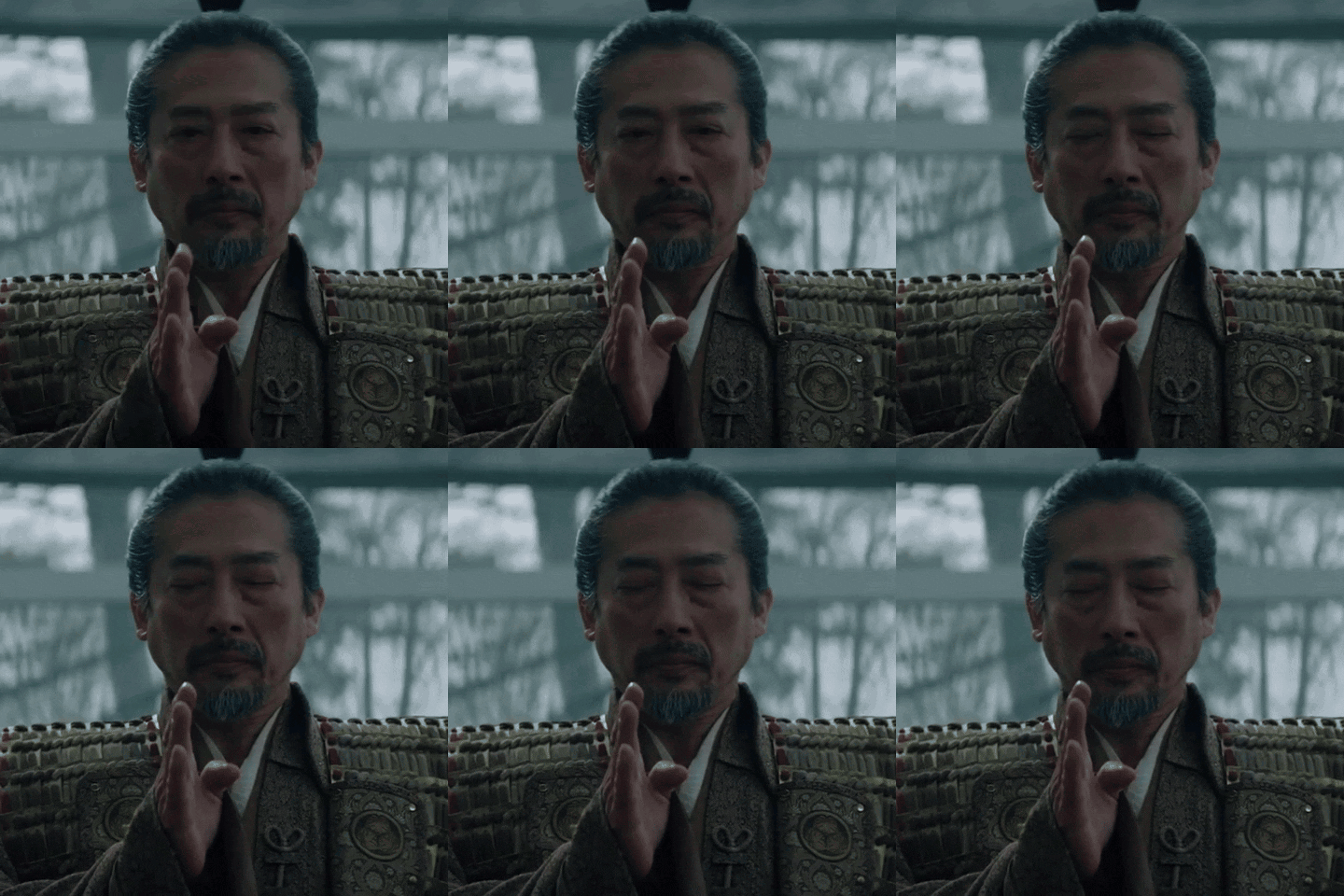
Okay, so the Edo period-surprise- is named after the capital city of the Tokugawa Shogunate, Edo. You know Edo in the current day by a different name, Tokyo. But for over 250 years from 1600 to 1868, Edo served as the Capital City of Japan and base for the Tokugawa Shogunate. Now, as much as I believe it’s founder Tokugawa Ieyasu is a fraud who had to be bailed out by Nobunaga and Hideyoshi, there’s no denying that he ushered in an age of peace and stability throughout Japan. If you’ve recently watched the new Hulu series Shogun, or read James Clavell’s novel that it’s based on, you’ll recognized Ieyasu as Yoshii Toranaga, and the book while it has a lot of embellishments for entertainment purposes, is mostly accurate in its timelines. Ieyasu and his descendants ushered in a system that kept all the daimyo under wraps, and for 250 years ruled over a mostly peaceful nation. Of course, not everything was sunshine and rainbows, but the Edo Period is foundational in what made Japan, Japan.
There’s often a misconception around the Edo Period, that the Tokugawa basically plunged Japan back into the dark ages, and that’s why when the Americans and Europeans finally got them to open up towards the end of it, they were so behind. There’s a BIT of truth to that but it’s profoundly overstated. One of the most defining policies of the Edo Period was the Sakoku Edicts which effectively shut Japan off from the rest of the world, the only outside nations allowed to trade with Japan or even enter Japanese ports, were the Chinese, and the Dutch, and even the Dutch were limited to one port in Nagisaki and were highly monitored. This was due to the fact Ieyasu rightly in my opinion, got sick and tired of European missionaries coming into the country saying they were just going to ‘spread their religion’, when in reality they were influencing daimyo and local samurai into assisting the trade interests of their home nations. It was after the Shimabara Rebellion, a catholic uprising in 1638 that the Tokugawa Government finally shut the country off.
The Sakoku Decree also helped the Tokugawa stop daimyo from gaining power by ‘converting’-I use the world loosely-to Christianity to gain favor with European nations, unlike in the Sengoku Period, Daimyo could no longer cozy up to the Europeans to get more guns and wealth. After this the Tokugawa went to work effectively keeping the power of all the daimyo in check. The daimyo were essentially split into two groups, the families who HAD supported Tokugawa Ieyasu at the end of the Sengoku Period, and those who didn’t. Again I’m simplifying but essentially the ones who sided with the Tokugawa weren’t treated like crap, while the ones who didn’t side with them were. A system of alternate attendance was implemented for all daimyo, this law required them to have two residences, one in their home region and one in Edo, where they would spend a year on and year off living at their home and then in Edo. This required daimyo to schedule long trips from their domains to Edo for them and all their staff, required them to be in constant contact with their home, it was essentially a logistical nightmare, which drained them of resources, and kept them always relying on the Tokugawa and their allies for support.
Not only did the Tokugawa manage to keep the daimyo in line, but the culture of the Edo period also flourished. Kabuki plays became insanely popular, and the paintings of the time are beautiful, particularly from the brilliant Katsushika Hokusai who revolutionized woodblock paintings with his famous pieces Thirty-Six Views of Mt. Fuji and The Great Wave off Kanagawa. Samurai at this time, essentially had to become bureaucrats. The Sengoku period was constant warfare and battles, Samurai going from that to generations of peace was certainly whiplash, and while they transitioned to these more bureaucratic roles that thirst for battle and violence never really went away, and led to the explosion of violence which eventually led to the end of the Edo Period, but there was a much more prevalent catalyst in bringing the Edo Period to an end… and it came in the form of big boats and giant guns.
So answer me this question dear listeners, what’s more American than giant boats and giant guns? If you guessed, Americans using giants boats and giant guns to show off how awesome we are to other countries to ‘suggest’ they ally and trade with us then you get a gold star, because that’s exactly what the Americans did when Commodore Matthew Perry came sailing in Edo Bay in 1853. Perry very politely essentially told the Tokugawa Government ‘open up your country and trade with us, or else we’re gonna come back in a year and when we do these guns won’t be firing blanks.’. The Tokugawa really had no room to argue, they saw that the technological gap was far too wide, so they acquiesced to a series of unfair treaties with the US, England, Russia, France and a host of other countries, and to say this pissed off quite a few clans would be an understatement.
The Meiji Era itself didn’t officially begin until 1868, but the 15 year period between Perry’s first landing in 1853 to 1868 is known as the Bakumatsu Period and saw what was as close to a Civil War as it could be without actually being one, until an ACTUAL Civil War started after 1868. You had the Tokugawa Shogunate and their allies on one side, and on the other side you have the ‘Sonno-joi’ movement, which was the rallying cry for those who wanted to overthrow the Tokugawa and restore the Emperor of Japan as ruler of the country. ‘Sonno-joi’ translates basically to ‘Revere the Emperor, Expel the Barbarians’. These people believed the Shogun had went back on his sacred duty to keep foreigners out of Japan. Sei-i-Taishogun, was the official title for the Shogun, which translates to ‘Commander in Chief of the Expeditionary Force Against the Barbarians’, the duty of the Shogun was to defend Japan for the Emperor, and the Tokugawa were accused of breaking this sacred vow.
Now, at the beginning it needs to be said, both sides, the Imperial Loyalist of the Sonno Joi and the Tokugawa Shogunate wanted to expel the foreigners from their shores, however, both had very different ways in wanting to do it. The Tokugawa wanted to learn and let the foreigners stay for a few decades in order to learn advanced military technology and adopt other advancements before kicking them out. However, the Imperial Loyalists thought that the American and English boats and guns didn’t matter because they had good old fighting spirit and wanted to right away kick them out, and there are even examples of these Imperial Loyalist clans fighting and firing on foreign ships and outposts, to which of course they were always severely beaten back. It caused the Tokugawa dozens of headaches, and the solution wasn’t as simple as taking some aspirin.
The tension between the two sides eventually got so bad, they BOTH went to the foreign powers, the Americans, the French, the English, and asked for weapons and assistance in taking down the other side. In a final attempt to avoid any fighting, and to keep his family from being destroyed, the final Tokugawa Shogun Tokugawa Yoshinobu, abdicated his position of Shogun, and the young fifteen year old Emperor Meiji ascended the throne of Japan, and for the first time since Yoritomo all the way back in 1185 took the title of Shogun, the Emperor of Japan, the descendant of the Shinto Sun Goddess, finally held power and sway in the Japanese government again. This wasn’t the end of the chaos, however, as the Boshin War from 1868 to 1869 that followed, became known as the final war of the Samurai. The remanants of those loyal to the Tokugawa squared off against the new Meiji government in what essentially was a proxy war with the British and French supporting both sides, and it eventually ended with an Imperial victory, and a new era for the new Empire of Japan. I wrote a really great paper for my senior seminar about the Bakumatsu Period, so I’ll definitely leave a link to that paper if you want to read it!
The Meiji Period lasted until 1912 with the death of Emperor Meiji. Of course, after the Bakumatsu period came one of the quickest modernization jobs in world history, Japan not only caught up to European powers within 50 years, they even surpassed them, as between the years of 1904 and 1905 they defeated Russia a traditional European power in the Russo-Japanese War, they demolished China in the first Sino-Japanese War, diplomats from Japan were traveling all over the world, and a ‘Japan Boom’ began everywhere from the United States to Europe. The Tokugawa Period came to a screeching halt, and an Empire took its place… however, as everyone surely knows, this little plucky underdog story does not have a good ending, as the Japanese army and government would go on to commit unspeakable atrocities in Korea and China following the Meiji Era and up to the Second World War, ever since then of course they’ve been a staunch ally of the United States and Europe in an attempt to counter the North Korean and Chinese threat. That is why I love the history of this country so much, they went from underdogs, to top dogs, and back down to underdogs again, but to this day, the Japanese spirit and culture endures.
Oh man, I seriously feel like I did you all a disservice, all of these periods deserve so much longer of an in depth deep dive, and I promise I will be bringing those to you all. This project here is certainly ambitious, but I really do hope that at the very least I’ve wetted all your appetites for how seriously awesome some of this history can be to learn. I know I’ve had a blast writing this script, finding these sources, and recording this for you all. I really hope to that I’ve peaked your interest enough to either continue listening to future episodes I put out, or to go and learn a few things about Japan yourself! Have fun going through the sources that are linked in the description, definitely go check out the channels on Japanese history that I recommended, and I seriously hope you all have an amazing day! Once again, I’m Akira, this was Akira Does Japan, and I’ll see you all in the next episode!
Script, editing, recording etc, are all by me, Akira!