Just like I expected, this was probably the most fun I’ve had on any project for any class in the entirety of my college career. I’m painfully aware I’m probably going to have to re-write some of these sections, but I’ve finally, FINALLY after all these years gotten to do what I always dreamed of for a history class.
Write about Japan, and specifically, what I’m an expert on in regards to their history.
As I mentioned in my last post, after getting the Story Map formatted, this week was all about filling in the stories with all of the information I’ve gathered about this period of Japanese history over the years.
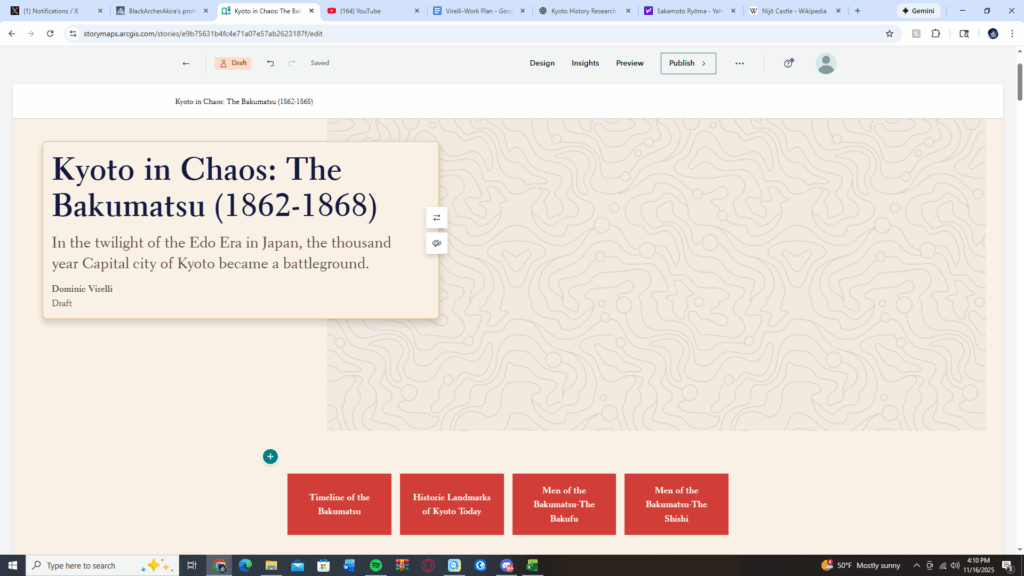
I finally reached the point where I can focus less on the digital side and more on the history and research side (after all we are still in a history class), which has been a welcomed change. After weeks of sitting at my computer, going back to old fashioned notes, annotating and drawing out important facts was such a welcomed change, especially since I’ve been able to weave this all into my new work schedule.
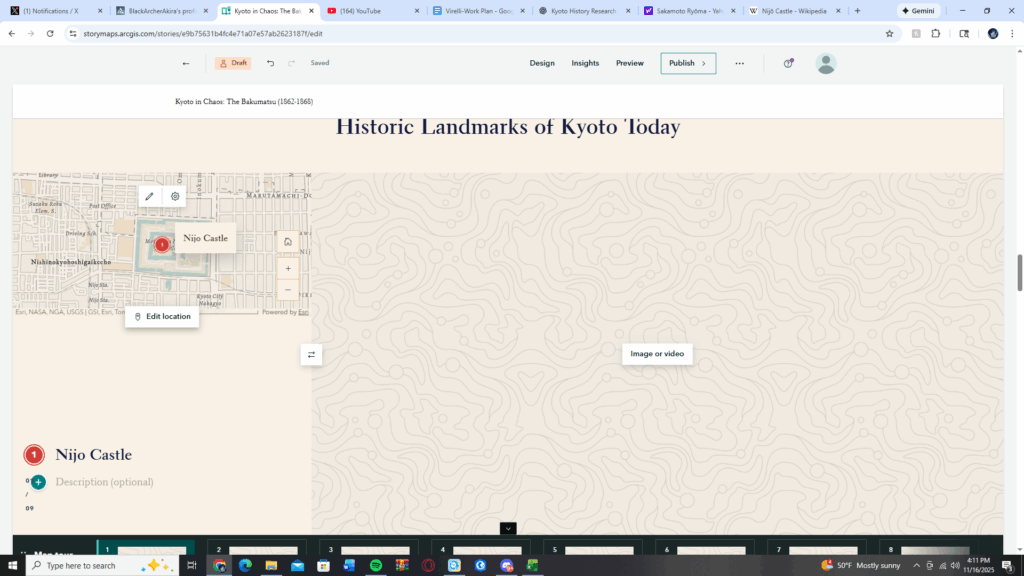
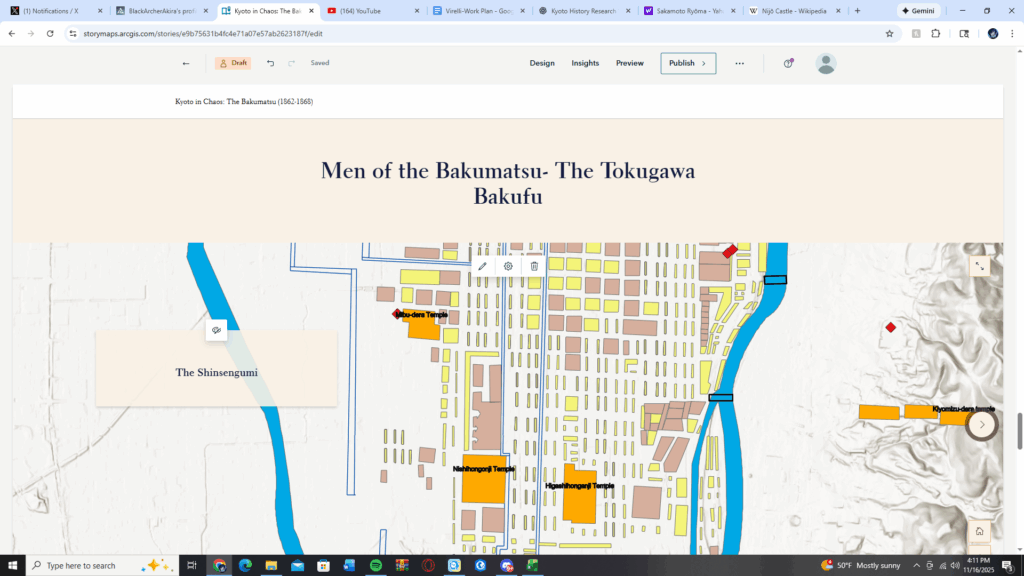
So, as I mentioned in class before as well, I’ve broken this story map up into three sections, 1. The Timeline of the Bakumatsu, 2. Historical Landmarks of Kyoto Today, 3. Men of the Bakumatsu (Both Imperial Loyalists known as Shishi, and the Tokugawa Bakufu). I’ve become well acquainted again with the Shinsengumi, Sakamoto Ryoma, Emperor Meiji etc, and have been able to do the deep dives into this era like I’ve done in the past.
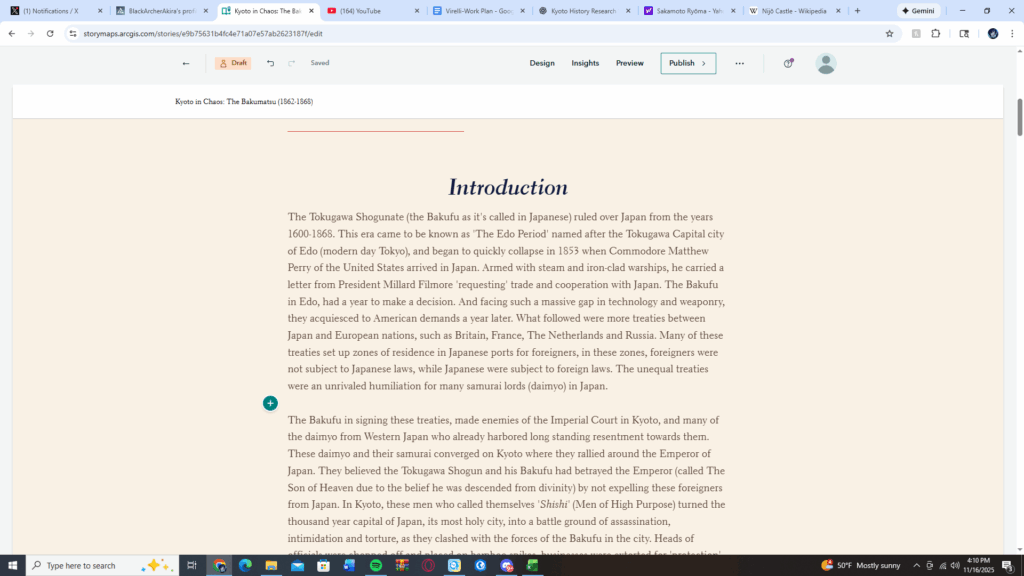
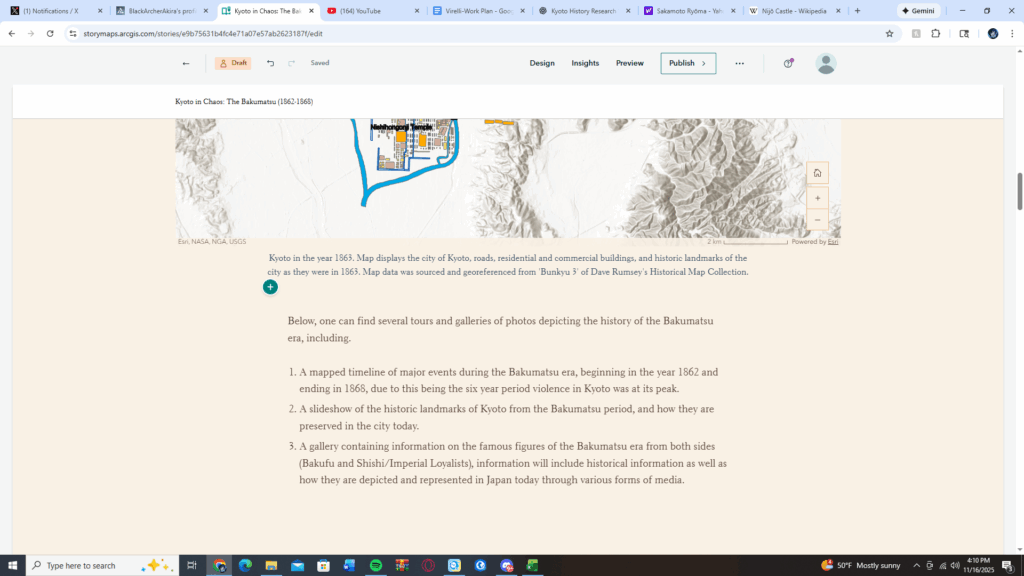
One thing people will notice from the screenshots is the lack of images, and I decided those will come later. I’ve been uploading my own pictures from my trip to Kyoto and will begin adding those after I’m satisfied with the information and research present in each of the sections. I don’t predict that taking more then a day, which gives me plenty of time to focus on the content.
The Timeline of the Bakumatsu, is what I managed to finish first, and it was a pure delight to be able to go back and really dive deep into these events. I don’t expect everyone to dedicate time to reading each of the write ups right now, but I really do think I’ve crafted a well thought out timeline. One thing one will notice during the events, is how power in the conflict shifts. From 1862-1865, it was the Tokugawa Bakufu in large part thanks to the Shinsengumi who have the advantage in Kyoto, however, in 1866, when Sakamoto Ryoma brokers the Satcho Alliance between Choshu and Satsuma domains, the momentum shifts back to the Imperial Loyalists. I made sure to mention the recurring individuals, old locations, I really believe it is some of my best work.
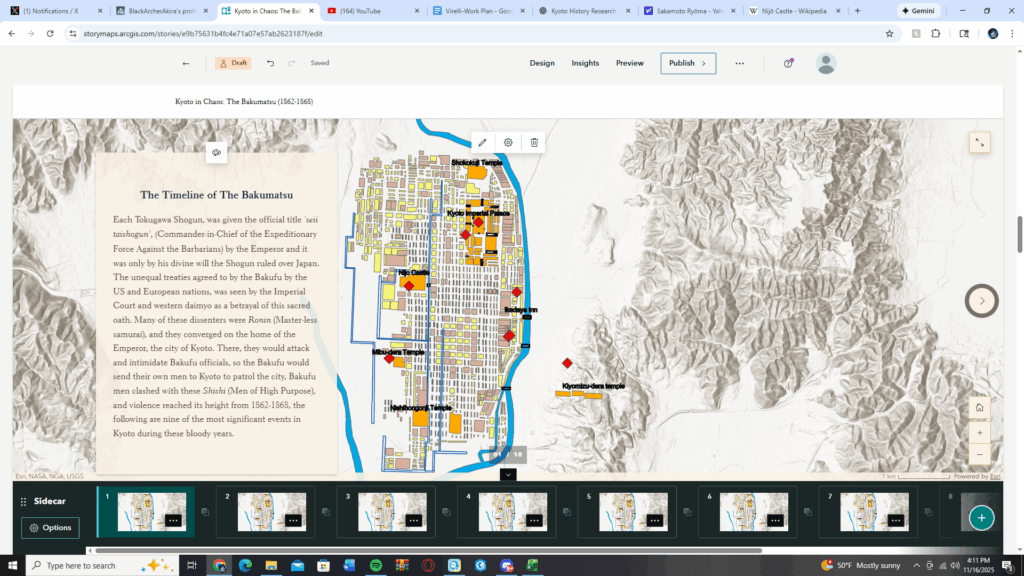
As for the final two sections, the Historic Landmarks of Kyoto Today, and the Men of the Bakumatsu sections, I anticipate easily having them both finished by the end of this week, perhaps in only a day or two. That will leave me all of next week, to add in my images, edit and re-write my sections, and clean up any edits of the map that I may need. Also, it will give me time to craft my presentation of this project. I’m a bit upset that the presentation will be more focused on the process of crafting the project, as opposed to the actual content itself, but either way I’m looking forward to being able to present this in front of my colleagues, and teachers who have been on this journey with me for years as I close in on my Graduate School graduation in the Spring.
And it is in part thanks to my best-friends in the Tokugawa Bakufu and the Imperial Loyalists!
Leave a Reply