I had mentioned this would be a problem at our last class meeting, but I’ve quite literally not been able to get any kind of work done this entire week. Tuesday found me at class all day, and then from Wednesday-Saturday I got to know the city of Philadelphia very well. Starting at the Constitution Center on Wednesday, I was also still committed for another few weeks at Eastern State Penitentiary as well. Which meant I would roll into the Constitution Center around 8:30 or 9am, work until around 4, drive over to Fairmount Ave and then be at Eastern State from 5, to late into the night. My record was until 1am this past Friday, so suffice to say I have not been at my computer for anything until typing out this blog post.
However, like I also mentioned to our group, I planned ahead for this. The map is finished for now, and next up is my list of events during the Bakumatsu into a CSV spreadsheet, and I have that prepared. This is where my already existing knowledge and research comes in, since it’s quite easy to pick up one of the dozens of annotated books on my shelf to pull out the events for the spreadsheet along with their dates and description of the event. Thanks to this, I could possibly even finish all the points into the spreadsheet in a single day or two. The StoryMap, is where a lot of my time is going to go as we transition into the month of November.
I believe firmly now the StoryMap is going to end up being the centerpiece with the Map supporting it. It’s going to give me the chance to talk about what has slowly become over the last year my specific specialization in my historical research. The transition, between the Feudal government of the Tokugawa Shogunate, to the modern Republic/Parliamentary style government we saw take over is fascinating of itself, but how these periods of blood revolution and political violence is remembered fascinates me even more. Allow me to share the humorous, completely insane question that I asked myself a year ago in the middle of my research that led me to this rabbit hole of information. Why in the hell did they turn that samurai into an anime girl?
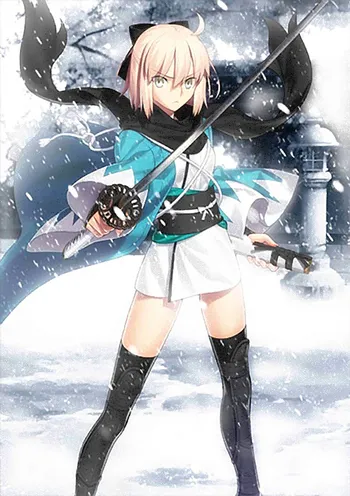
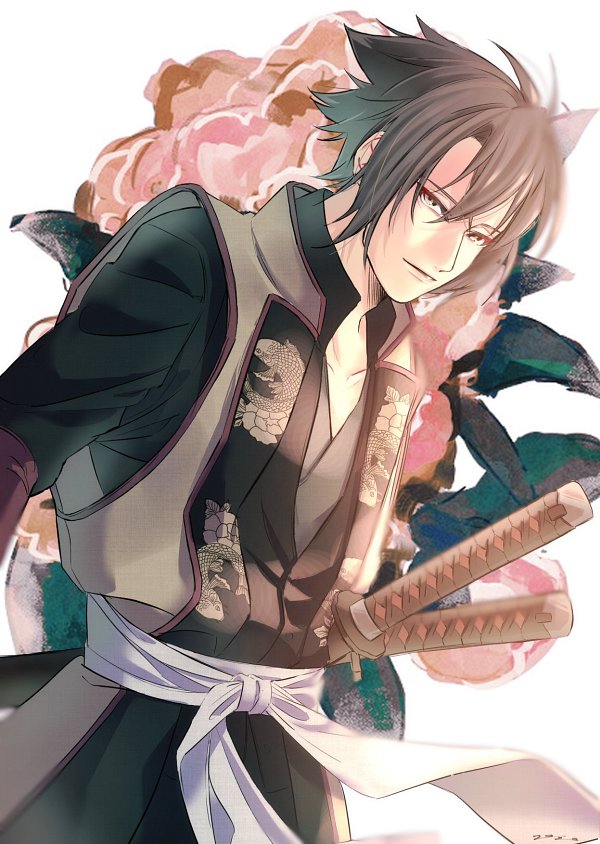
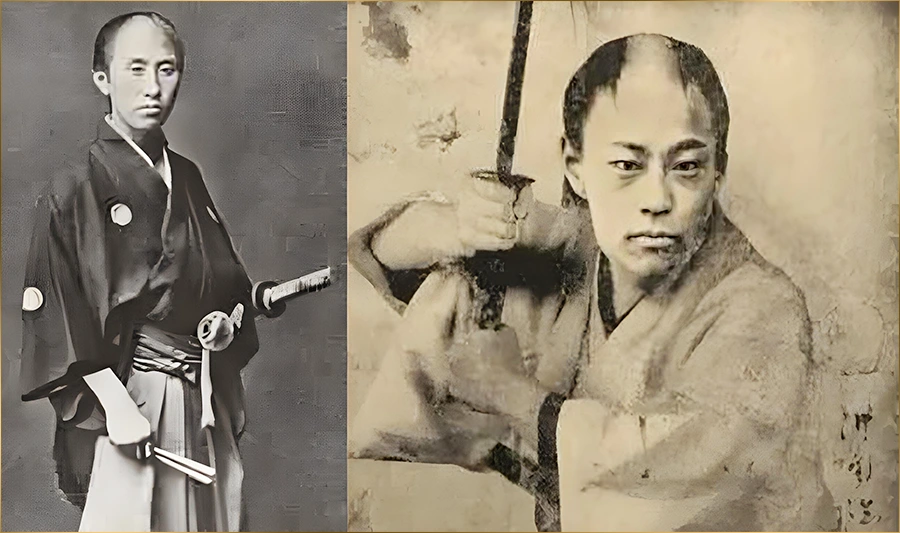
Above, you will see three pictures depicting the SAME person. Okita Souji. I love Okita Souji, he was touted as the most talented swordsman of the Shinsengumi (The Shogunate Secret police force of Kyoto), and was also the youngest, only being 19 when the group arrived in Kyoto. He is in modern Japan one of the most legendary and well known Samurai in history, known for his swordsmanship, honor, and for the fact he died at only 25 from Tuberculosis. Now, Okita Souji, was objectively a horrible person. He participated in the Secret Policing of Kyoto, he was part of assassinations, intimidations, torture of locals and prisoners for information, however, despite that he is in the modern day one of Japan’s most beloved figures to the point where my Japanese teacher who grew up in Japan said he was her favorite samurai.
The above picture on the left, depicts Okita Souji in Fate Grand Order, and as we can see, he is now a she. The in game/show this is explained as in legends, Okita was ‘so incredibly beautiful and lean’, that he was actually a woman who was mistaken as a man, so they decided to depict him as a woman. On the right, is Okita Souji from the hit anime and visual novel Hakuouki. Hakuouki is a visual novel/dating simulator, where all the members of the Shinsengumi are depicted as beautiful men, typical ‘heartthrobs’ who you have to choose between. These two depictions of Okita are easily the most popular and well known in Japan. However, the man in the middle, is a picture of the REAL Okita Souji…yeah, a bit different then the cute anime girl or hot boy heartthrob he’s depicted as my Japanese people today.
These depictions of Okita are SO popular that when I was looking for a picture of the real Okita to add into this blog post, there were around FORTY TO FIFITY results before it showed up, and of course this is after I scrolled past all the advertisements for Okita Souji merchandise.
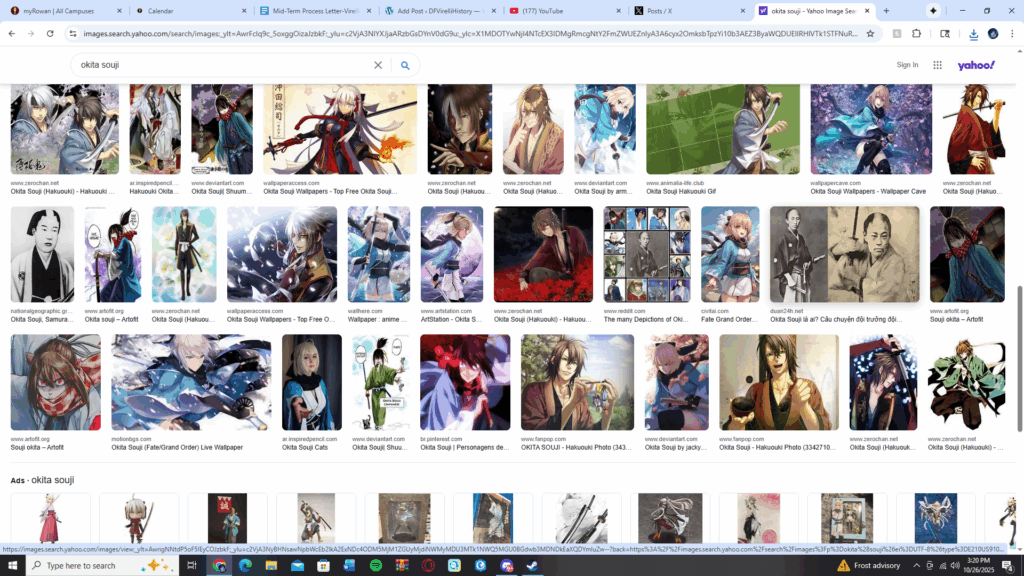
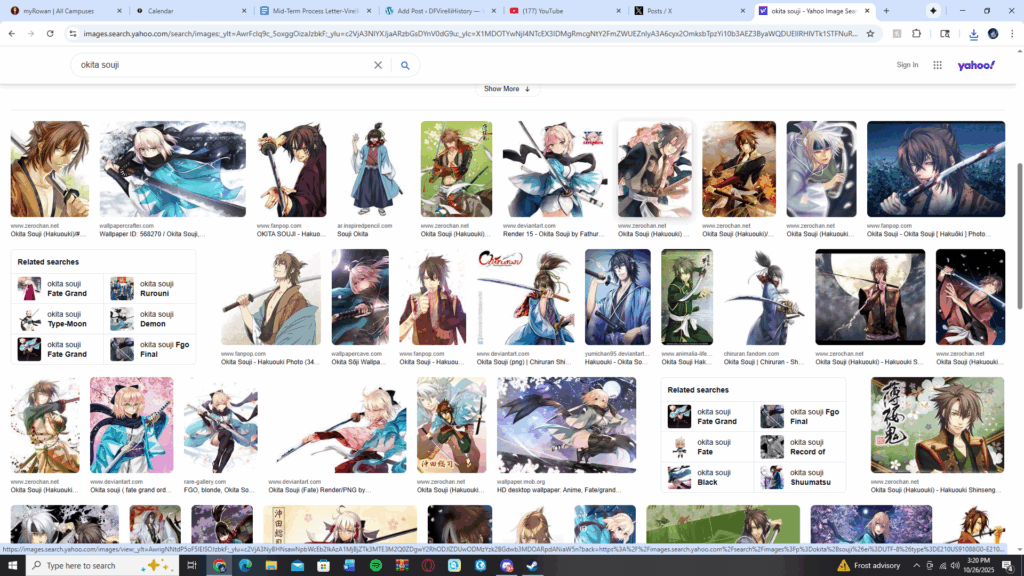
So, again, I ask the questions, why in the world is one of Japan’s most legendary samurai a cute anime girl?
The answer, I believe lies in the immediate aftermath of the Meiji Restoration in 1868. A temporary Imperial Government took over in the immediate aftermath of the Boshiin War (1868-1869) which was the official war between the two sides backed by European and Western powers on either side. The Shogunate collapsed, and Feudalism was gone, but in reality it took the new government over 20 years, and ANOTHER war, to finally have a new constitution and official style of government in place. They would eventually settle on a Parliamentary system based off the German model, but during that twenty year period, the remnants of both sides of the war, former samurai, regular common people, wealthy oligarchs, people needed some kind of common ground. And when was the last time that the country was even semi united? The end of the Tokugawa Era. By the 1880s and 90s, the events of the Bakumatsu, the early Meiji and late Edo eras, had receded sufficiently enough in time, to qualify for the time honored tradition that occurs not just in Japan, but around the world, of being used to serve, esteem and blastpheme the present. Figures like Okita Souji, the Shinsengumi, Sakamoto Ryoma and Saigo Takamori, people on both sides of the era, were used to justify the events of the present.
This continued on into the 20th century, and picked up even more in the Nationalistic, Imperialistic years leading up to World War 2, and during the years following. Things like the amazing samurai era period pieces by Akira Kurosawa, historical fiction novels by Ryotaro Shiba, and even K,C, and J dramas (Korean, Chinese, Japanese drama shows) my teacher watched as a child, brought back the past and ingrained figures like Okita Souji into modern Japanese culture.
And all of this adoration, particularly of the figures from the Bakumatsu and Meiji era, began in Kyoto during that 15 year period. So, while I was not able get any work done on the computer, between listening to my audiobooks on the way to work, reading snippets during breaks, I’ve refreshed myself on many of the events I’ll be including, and on what it was about the time period I grew to find so interesting.


Leave a Reply